{`How we replaced a cleaning brand's phone-and-spreadsheet dispatch with an auto-assignment algorithm and a store-owner app.`}
Building a Store Dispatch App: How We Cut a 10-Minute Phone Process to 1 Second

Lukas
Jun 4th 26
13 min Read
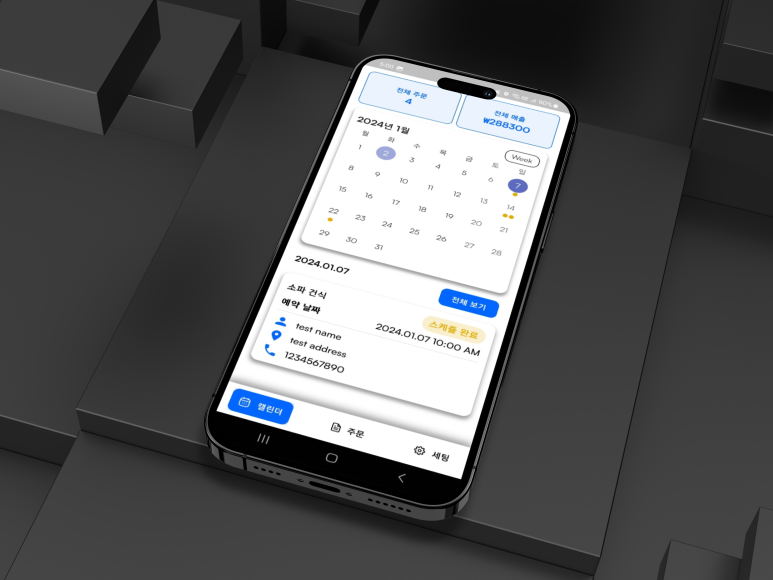
We recently shipped a new project with Saerow (주식회사 새로): a store dispatch and reservation app for store owners. It's the story of how we replaced an order-assignment process that ran entirely on phone calls and spreadsheets with an auto-assignment algorithm and a dedicated store-owner app. Before getting into the app itself, some background is in order.
Background: A dispatch process that ran on phone calls
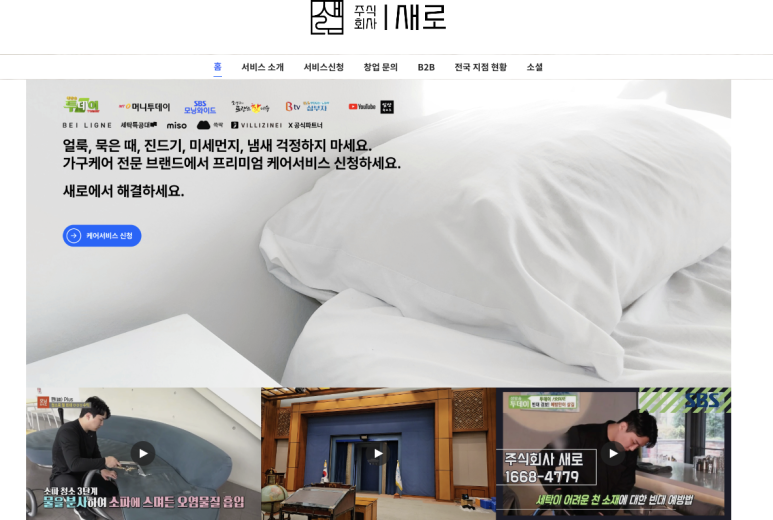
Saerow is a specialty cleaning brand that handles sofas, mattresses, mats, and the like. They served both individual customers and corporate clients. The problem was scale: order volume was high, and there were so many stores to dispatch those orders to that managing it by hand had become nearly impossible.
The old assignment process looked like this:
- Head office collects orders coming in from partners and various channels.
- They check each order's address and call the nearest store.
- They confirm whether that store has a conflicting schedule on the date.
- If it does, they call another nearby store.
- If that store's schedule is open, they hand the order off to it.
Because every step was manual, a CS team member was tied up doing nothing but this all day long. So head office and the store owners asked us to build internal software to manage orders. We diagnosed their situation from the inside and set out to build exactly the software they needed.
The build (admin dashboard)
The core problem was that assigning a single order to a store was too complex and took too long. So we set out to automate it. More than any other project we'd done, this one lived or died on the design of the admin dashboard.
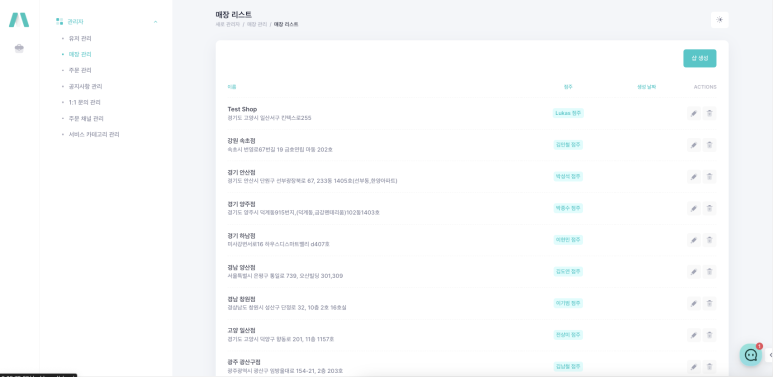
1. Putting store data into a database
First, we moved all the store information into a database. We collected coordinate data based on each store's location, and designed the system so that only the respective store owners could access the app.
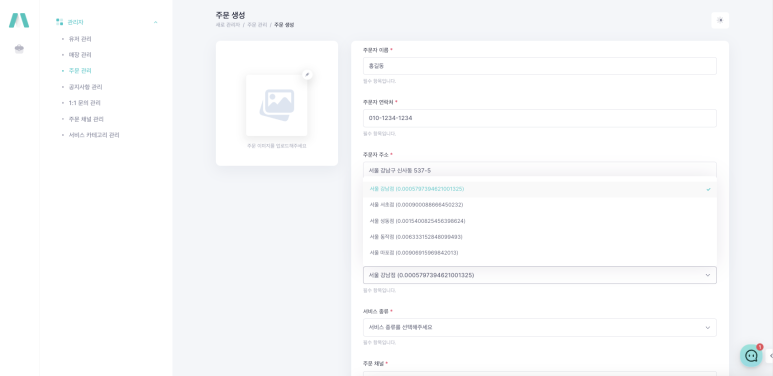
2. Automatic order assignment
This is the heart of the service. The CS team at head office no longer has to call each store owner one by one to ask whether they're available. When a CS agent enters the customer's information, address, and service date, our algorithm shortlists the five nearest stores. If a store is already booked on that date, the algorithm adds the next-nearest store with an open schedule. An assignment that used to take 10 minutes of phone calls per store now resolves in a single second. Once an order is assigned, a notification goes straight to the store owner's phone for immediate review.
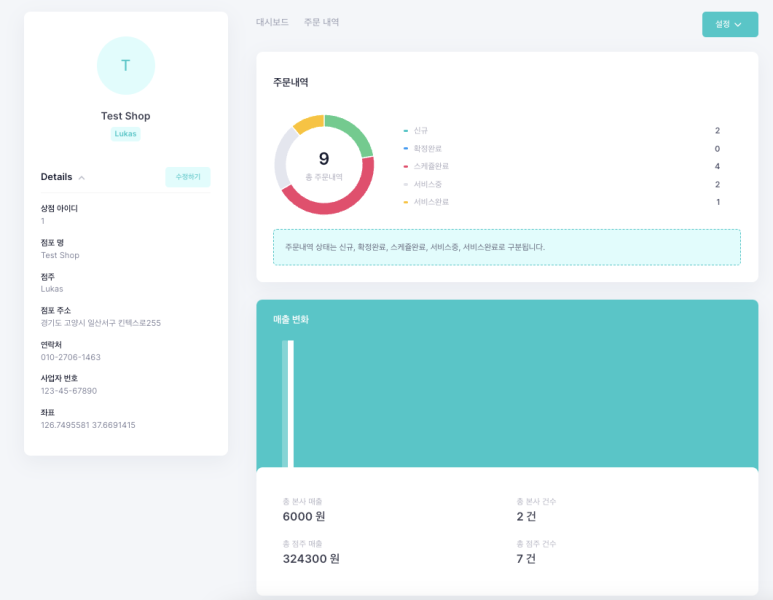
3. Turning data into a dashboard
We also turned the per-store order data — previously tracked in spreadsheets — into live metrics the team can read at a glance.
The build (store-owner app)
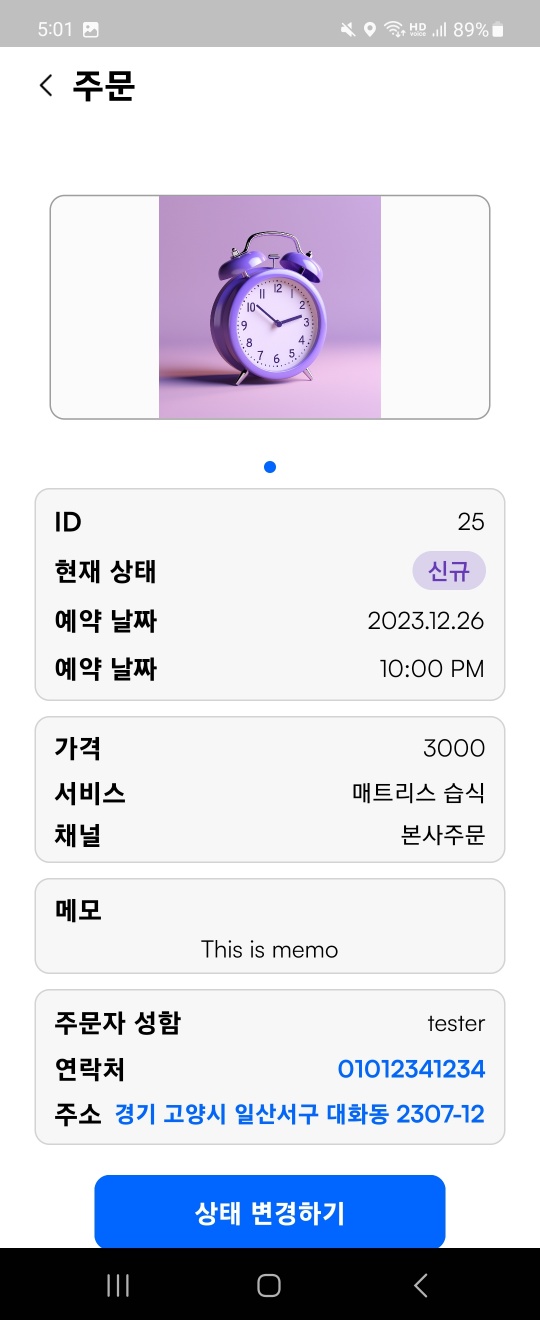
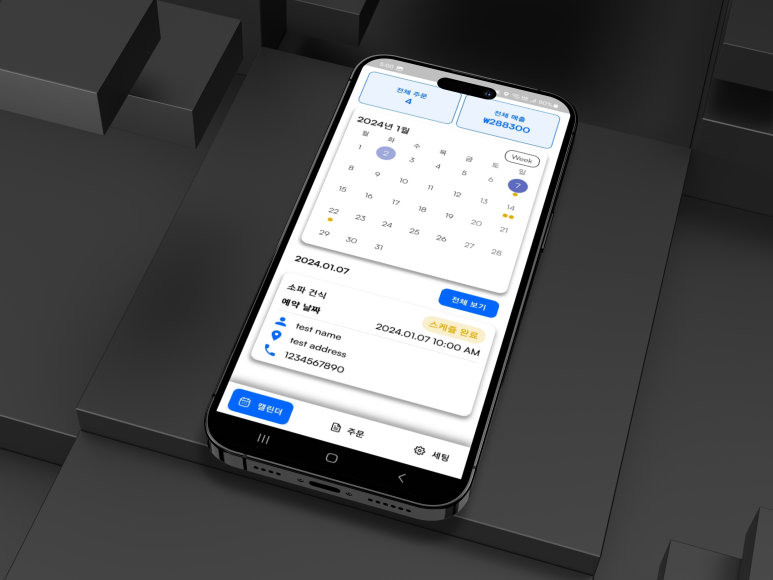
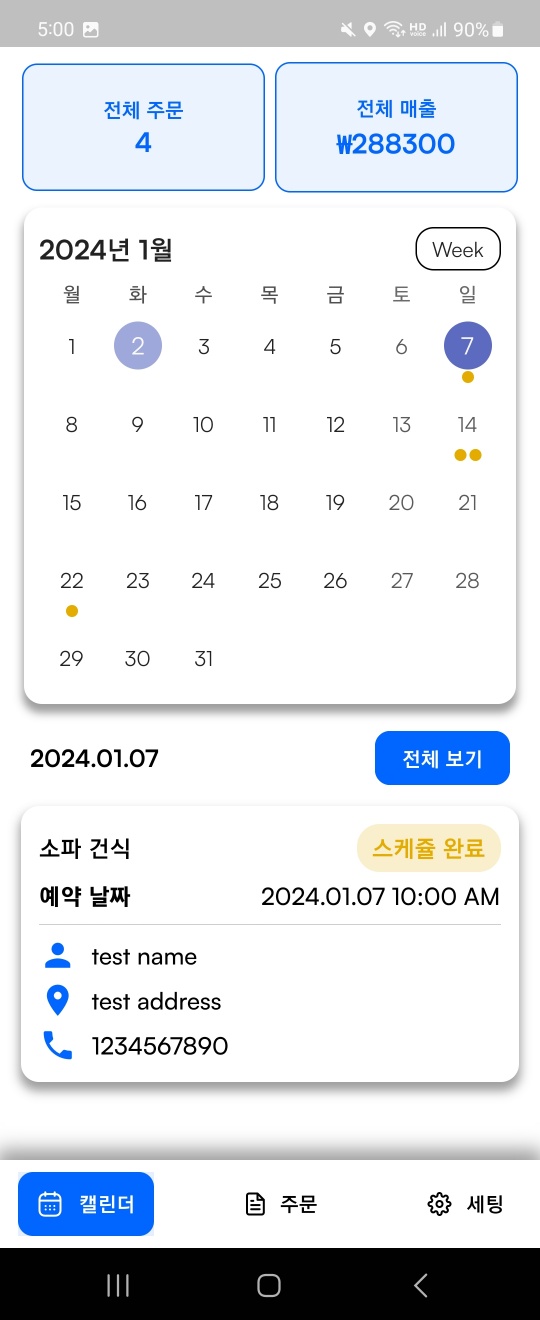
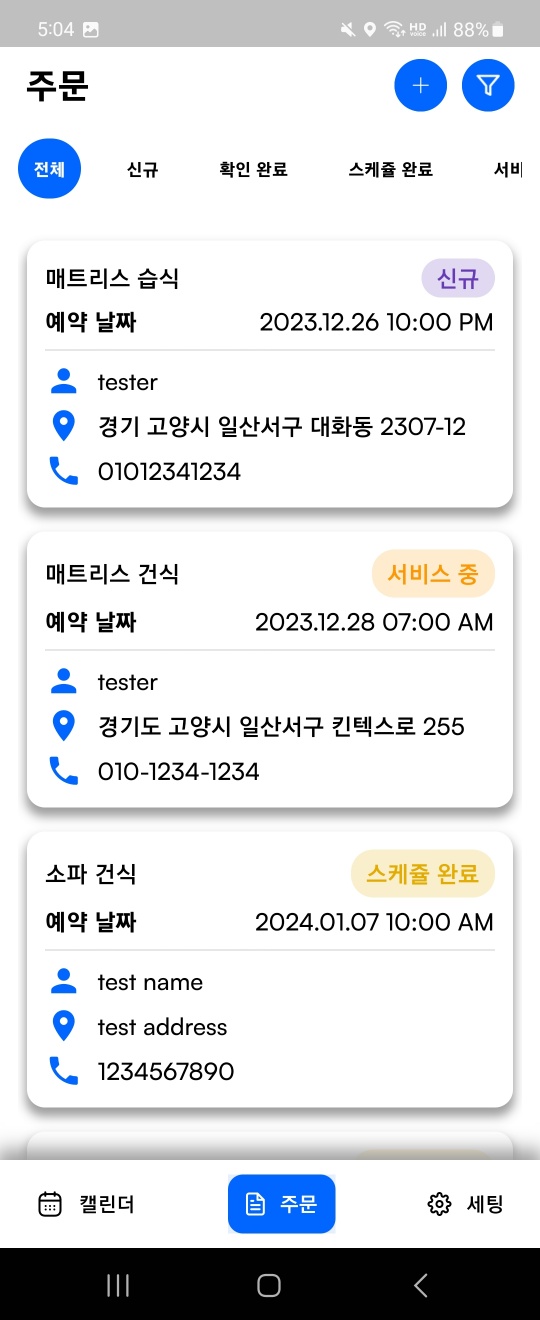
So how does a store owner actually use the app once they receive an order notification? As you can see, orders flowing in through the admin dashboard can be tracked in real time in a calendar view.
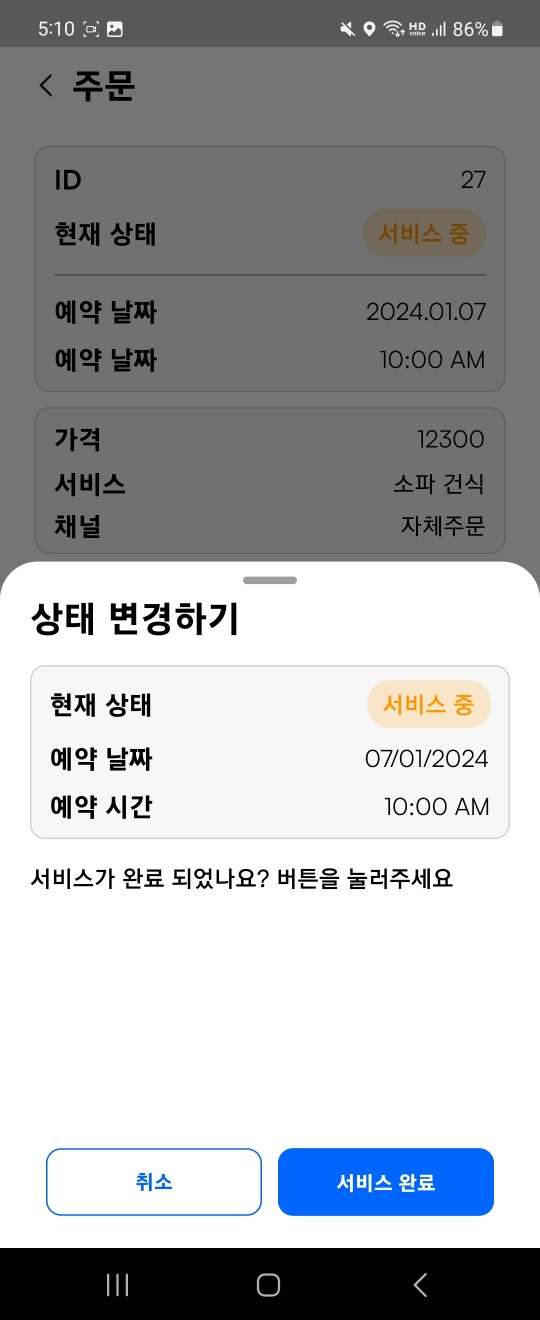
Owners can check detailed information on each order and adjust its status as the order progresses. The app is also integrated with Naver Maps, so the location of every order can be pulled up directly.
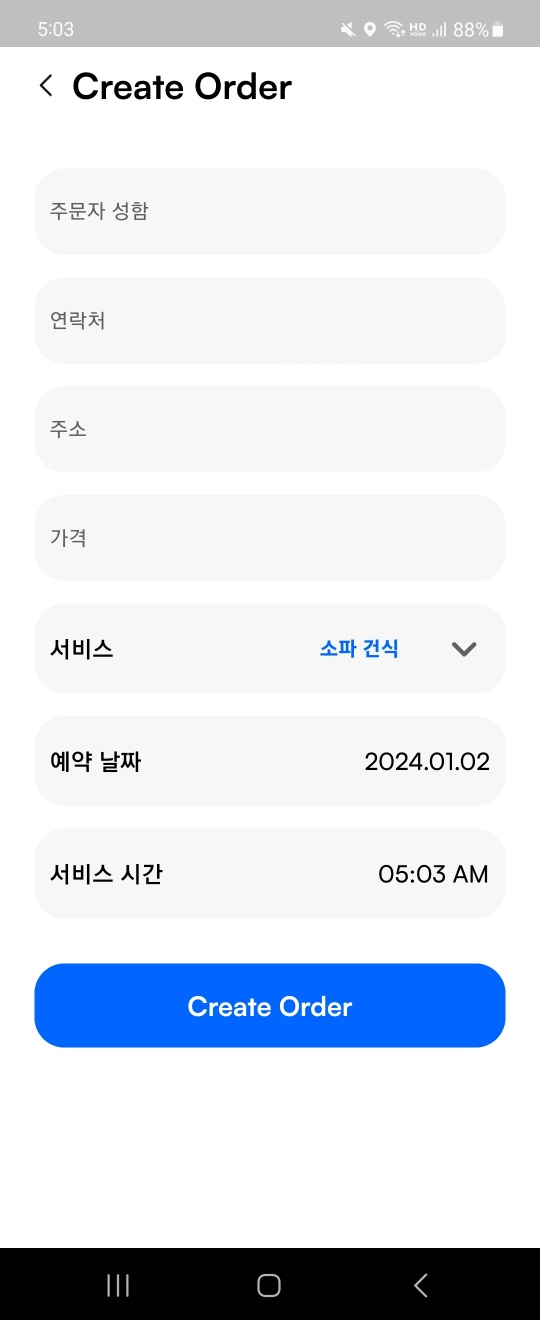
Owners can also add orders that came in on their own, not just orders routed through head office. The founder of Saerow stressed that this feature was essential. Until now, head office had no way to see the schedule of those self-generated orders, which made the CS team's job of assigning work painfully difficult. With every order digitized and managed this way, head office no longer has to contact each store owner individually to check schedules — because orders simply won't be assigned to a store that's already booked on that date.
Who built it
This project was led by Abdur, our senior developer and a genuine point of pride for the team. People often ask us how we manage to build software this complex while communicating in English with an overseas development team — software that would be hard enough to spec out in Korean. It's a fair question, and we're constantly working internally on better ways to communicate.

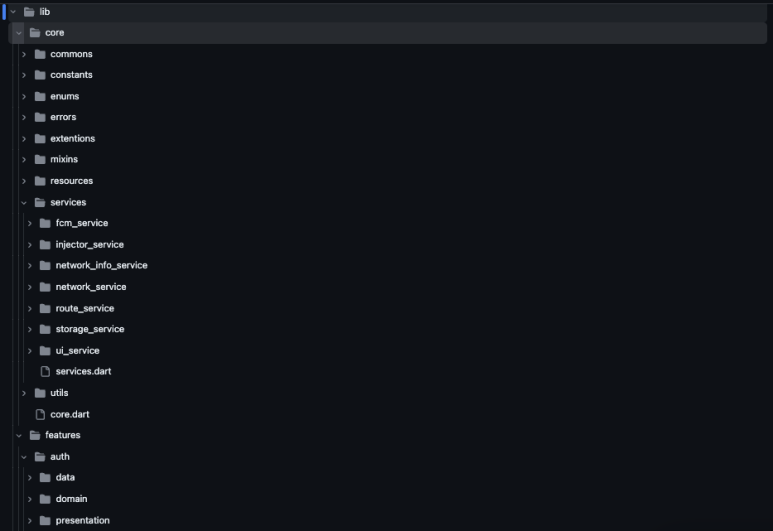
Project architecture
In outsourced development, it's common for teams to care only about how things look on the surface and to pay almost no attention to code quality. But looking at the architecture of the project Abdur led, it's so clean and free of clutter that I've learned a lot from it myself.
I handled the backend API and most of the communication with the client. There were moments of internal debate when features that weren't in the original requirements got added along the way, but in the end we built everything the client requested at no extra charge. Looking back, I think that was the right call. That was the Potential x Saerow project.
Want to digitize a complex internal operation and turn it into software? Potential (포텐셜) is a partner that helps Korean and Asian founders design their path into global markets. We'd love to hear about your project.


