{`A founder who long wrestled with the word 'vision' offers a only-half-serious taxonomy of who builds, and why.`}
Startup Visionaries vs. Merchants: Two Kinds of Founders, No Right Answer

Lukas
Jun 4th 26
4 min Read
In the startup world, "vision" is forever praised — but nobody remembers the vision of a company that failed. Here's a only-half-serious taxonomy that splits founders into two camps: visionaries and merchants. And why I crossed from one to the other.
The Word "Vision" Tormented Me
"Vision," that word so common in the startup world, was a subject that tormented me for a long time. There are many interpretations, but put simply, it's something like "the problem I'd stake my whole life to solve, the company's goal, the founding team's philosophy." Because founding a startup demands bone-grinding pain, the startup world insists you need a company philosophy — a "vision" — that won't waver in the face of any hardship.
When you join a startup accelerator or similar founder program, the usual sequence goes like this:
- Form teams of people who are a good fit.
- Have the team define its vision.
- Brainstorm services that could achieve that vision.
The Moment the Order Flips
But sometimes steps 2 and 3 show up in reverse:
3) "Gen AI is hot right now — got any ideas we could build with it? What if we applied it to HR, or design, or marketing?"
2) "Our company's vision is to revolutionize HR, design, and marketing through AI."
The reversal is sneaky enough to create cognitive dissonance, making the founder genuinely believe they defined the vision first. That was me for the last ten years:
- First I'd think up a service,
- then somehow wedge in a vision to match it,
- and then act as if it had been my long-held vision all along.
And when the service failed, I'd watch myself abandon the vision and beat myself up about it for ages. At first I didn't really notice. But once the number of services I'd shut down passed five or six, I had to admit it: I'm someone who readily abandons visions.
Visionaries vs. Merchants — A Taxonomy of Zero Credibility
Watching the founders around me closely, I could sort them into two types: visionaries and merchants. (The word "merchant" sounds a little off, but I'm using it just for clarity.) These aren't categories you can split with a knife — it's more of a spectrum. Below is the zero-credibility taxonomy I put together for fun.
| Trait | Visionary | Merchant |
|---|---|---|
| Education | Highly educated | - |
| Childhood environment | Affluent | Not affluent |
| Area of interest | Changes in the world (deep tech, innovation, the future) | Fundamental human needs (health, money, sex) |
| Motivation to start | To make the world better | To support family and parents, a comfortable life |
| Founding style | Co-founded | Solo-founded |
| Funding | Investment, grants, accelerators | Bootstrapping |
| Field | Deep tech, startups | Distribution, manufacturing, franchises, knowledge businesses |
| Failure rate | High | Low |
| Cash-generating ability | Low | High |
| Study IQ | High | - |
| Street IQ | - | High (the ability to deal with people in the real world) |
Curiously, these two groups tend to look down on each other. The visionary looks at the merchant and thinks, "That's just hustling, not a real business." The merchant looks at the visionary and thinks, "Okay, so how much do you actually make a month?"
Jajangmyeon or Jjamppong?
The visionary-vs-merchant question is like choosing between jajangmyeon and jjamppong — two Korean-Chinese noodle dishes — there's no right answer. If you like jajangmyeon, eat jajangmyeon. If you like jjamppong, eat jjamppong.
I'm a case of starting as a visionary and moving to merchant. I used to prefer jajangmyeon; now I prefer jjamppong. Because nobody remembers the vision of a company that failed.
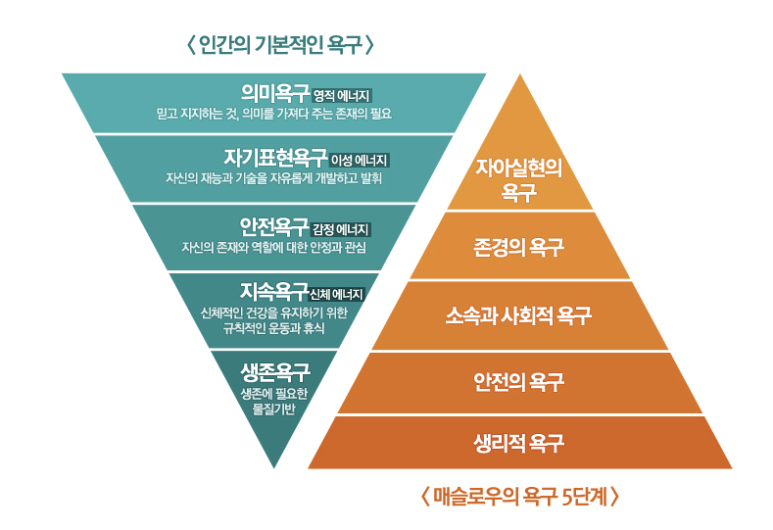
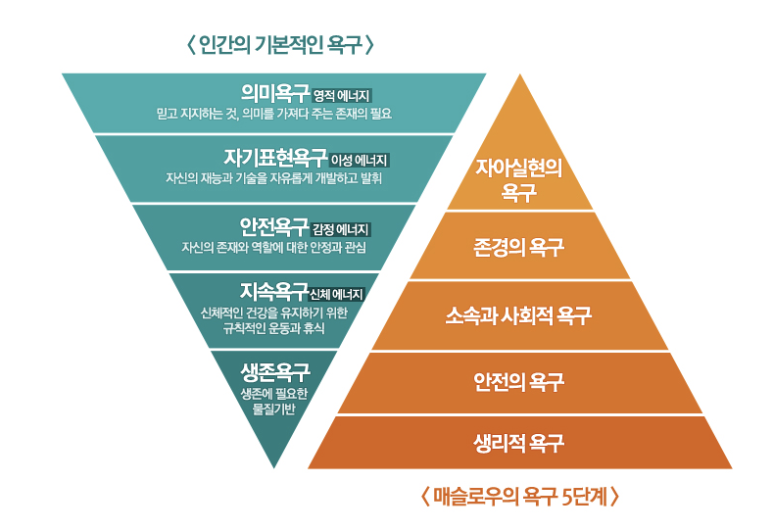
I don't think there's a better framework for explaining people and companies than Maslow's hierarchy of needs. Where on the pyramid does our company, Potential, sit? I hope we can soon climb out of the survival stage and start finding meaning.
This week is Eid, one of the major religious holidays in Bangladesh. Thanks to it, I'm grateful to finally have some time to sort out my thoughts. Eid Mubarak.
Potential is right now moving past the survival stage and into the search for meaning. If you're a founder wrestling with similar questions, let's talk anytime.


