{`Two sign-up buttons don't make a marketplace run`}
What Happens When You Outsource a Platform to an Agency That's Never Run One

Lukas
Jun 4th 26
13 min Read

This is a follow-up to "Why do dev agencies only build other people's apps?" This time we go a level deeper: what happens when you hand a platform build to an agency that has never actually run a platform.
When a Company That Only Takes Orders Tries to Build a Platform
As I mentioned in the last post, 99% of dev agencies are used to doing what they're told. When a company built entirely around order-taking suddenly has to empathize with a customer's real needs, its own products fail — ten times out of ten. So agencies give up on building their own services and pour themselves entirely into client work.
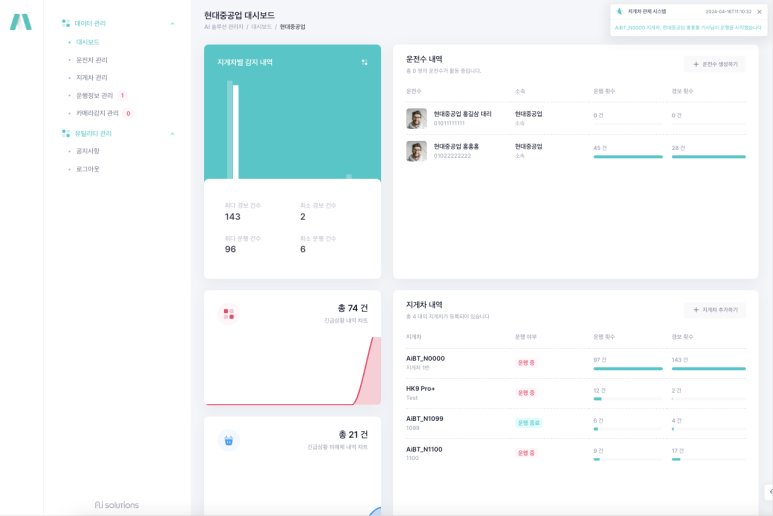
Search "platform development" on any freelance marketplace and every shop that comes up leads with the same slogan: "Just tell us what you want — we'll build all of it." And sure, they probably will build it. But the platforms they build almost never succeed as actual businesses. The biggest reason: not a single one of them has ever built, run, and grown a platform themselves. When shops with no operating experience take on a platform as pure build work, a lot of things start to break.
Chicken or Egg?

Say you're building a food-delivery app from scratch. Where should you focus — the restaurants, or the customers placing orders? Without restaurants, no customers will show up. But without customers, restaurants have no reason to list either.
Say you're building a freelance marketplace. Do you focus on the experts, or on the customers who'll buy their services? Same trap: no experts, no customers — but no customers, no reason for experts to join.
Uber, ride-hailing apps, travel-booking platforms — every platform business faces this dilemma. And most agencies don't think about it at all. They assume that once they've built a "sign up as a customer / sign up as a restaurant" button — or "sign up as a customer / sign up as an expert" — their entire job is done. But what does reality actually look like?
A Platform I Built and Ran Myself: An Academy–Parent Marketplace
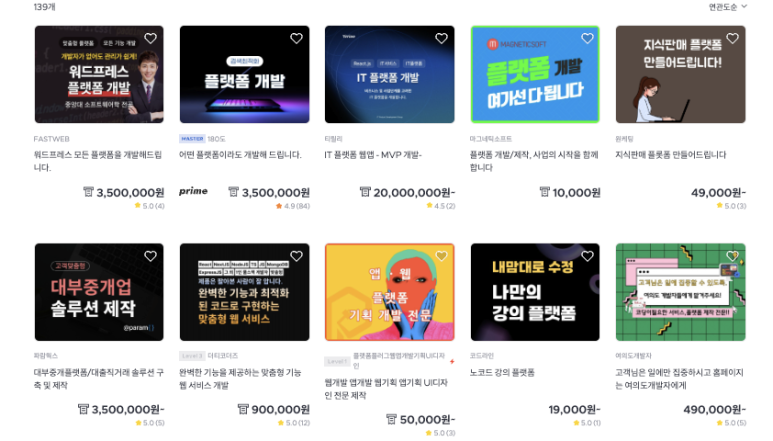
This platform connected private academies in a competitive education district with the parents looking for them. Back in university, my co-founder and I spent a month or two walking the streets in the July heat, interviewing parents and students. We also went academy to academy, quietly slipping flyers and business cards through the gaps in their doors. That's how the service was born.
Back when I knew nothing about business, I'd collect reviews in the morning and code at night — brutal and exhausting, I remember it well. But that's exactly how I learned what to focus on when running a platform. As a result, the service accumulated tens of thousands of academy reviews across the district and built a working ad business. (I'm no longer involved with the company, so I don't know its current state in detail.)
Another One I Built and Ran: A Parent–Manufacturer Sampling Marketplace
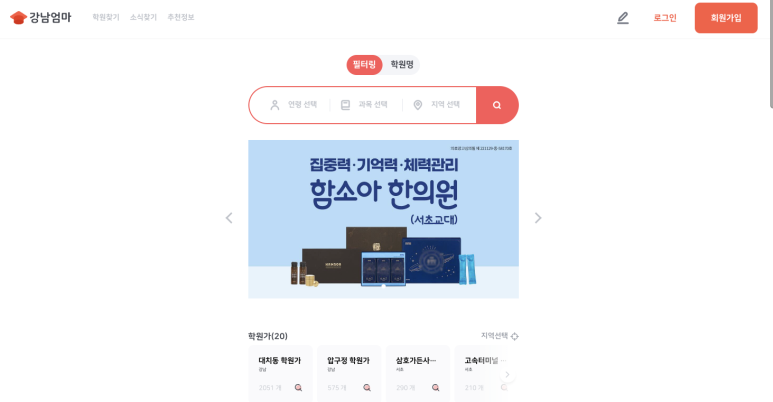
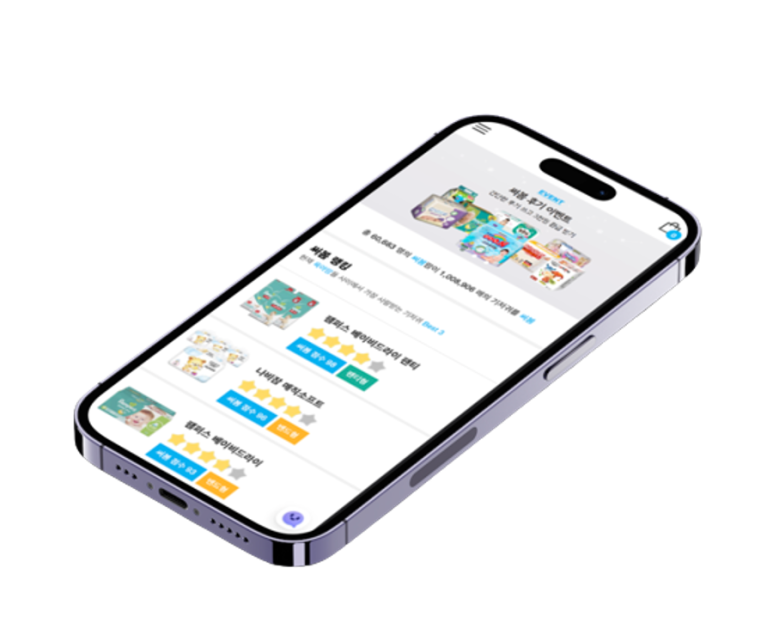
The company I started next was the same story. Founded on ₩600K (~$435), it became a diaper-sampling marketing business that distributed over 1.2 million sample packs. Between new parents and diaper manufacturers, which side should we have focused on? It took me more than three years of trial and error to land that first manufacturer — and in the end, the brand became almost a generic term that parent communities reach for whenever a diaper problem comes up.
A Platform Doesn't Run on a Sign-Up Page Alone
I can't cover everything in one post, but if you think a platform is solved by building "sign up as an expert" and "sign up as a restaurant," you're mistaken.
- Every page and every piece of copy has to be designed strategically.
- The earlier you are, the more you must focus on either the chicken or the egg — not both.
- You need to know, before you sell, exactly which side to attack first and where to start.
After long trial and error, we learned which side to lean into — academies or parents, parents or manufacturers — and where to begin when going to sell. Most dev shops can only code, so they're weak on how business actually works in the real world. A platform does not run automatically on a single sign-up page.
What Is a Platform Business?
- Food-delivery restaurants ↔ customers who want food delivered
- Travel-booking properties ↔ customers looking for a room
- Marketplace sellers ↔ customers looking for goods
- Freelance experts ↔ customers looking for experts
A platform is a service where two different types of users buy and sell on the same place. Growth on one side drives growth on the other, and the platform's gravity keeps compounding. But at the very start, there are no users to provide the service yet — and that's the dilemma. Just picture a food-delivery app with no restaurants, or a travel-booking app with no rooms.
This post continues in "Inflated quotes and the wildly oversized MVP."
A platform starts with business design, not code. Potential is a development partner that has built and grown platforms first-hand — and helps Korean and Asian founders expand westward. If you're wrestling with how to scope a platform, reach out anytime.