{`There's a time to make money, and a time to build capability. We chose the second.`}
Why We Only Take On the Hardest Software Projects
Lukas
Jun 4th 26
6 min Read
Most dev shops would never take these projects at our price. We take them on purpose. Right now, building our team's capability matters more than making money — so we deliberately bid on the hardest, most communication-heavy work we can find. Here's why.
Like most founders, March and April were a forced march. Barely sleeping because of a newborn, buried in work, with no room left in my head to read or write. Yesterday my mother-in-law watched our son, and for the first time in two months I woke up with a clear mind. Times like this are exactly when I need to write down what's been happening at Potential. As always, a lot has.
The projects we're running right now
The work we're handling at Potential is the kind no outsourcing shop would touch at this price. A quick tour:
Company A
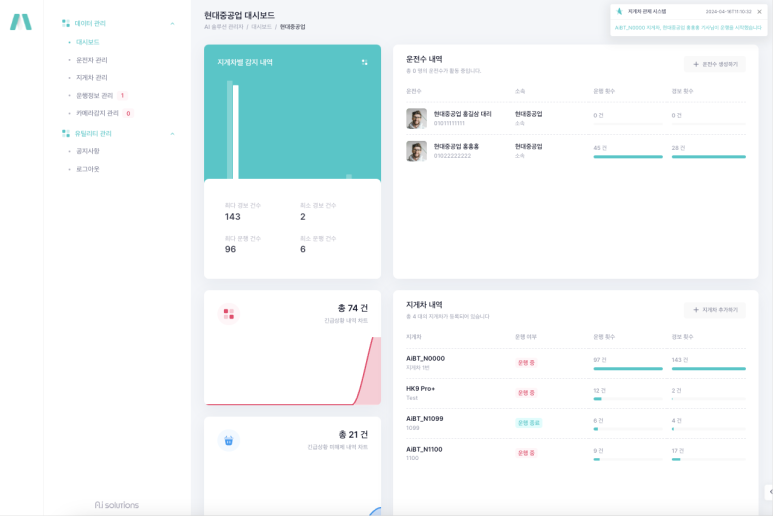
A SaaS that talks to an AI board mounted on forklifts, with a per-operator dashboard showing real-time status. The app has to catch signals coming off the AI board and push them over sockets, in real time, to each tenant's dashboard. That means working closely with the hardware engineer, understanding how the hardware communicates, and designing an architecture that fits a multi-tenant SaaS.
Company B
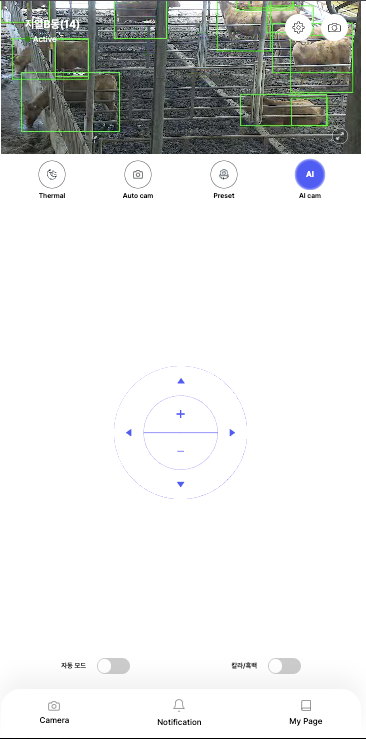
We had to communicate over WebRTC with a Jetson board embedded inside a CCTV unit. You have to understand how WebRTC actually works, and push alerts to a farm owner's phone based on what the camera detects. There are several ways to control the CCTV, and since the camera ships with its own AI engine, this again meant tight coordination with the camera engineer. In short — very hard.

Company C
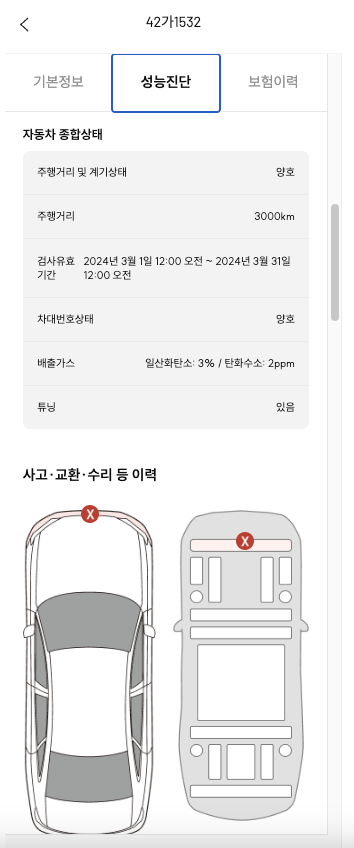
A used-car marketplace. When we started, I had no idea the database design for a used-car platform required this much thought. Once you account for manufacturer, product line, model, sub-model, grade, and sub-grade, you cross 12,000 possible combinations — plus hundreds of vehicle options. The condition inspection alone has more than 80 fields. On top of that, you have to integrate several third-party APIs: feed in a plate number, pull the car's data, and parse it to fit our server exactly. Insurance history, the same. Brutally hard.
And here's what we charge for it
If you knew what we charge to build these, you'd be shocked. Most of them land around ₩20M (~US$14,500). (Other agencies will understand better than anyone how unrealistic that price is.) That's a big part of why so many of our clients want to keep working with us.
When I said I was starting a software company in Bangladesh, everyone said the same things — I heard them again just last week:

- "You can barely communicate with Koreans — you think you can communicate with foreigners?"
- "Project management matters more than the actual development."
- "100% remote with flexible hours? You really think that works?"
Why we choose the hard ones on purpose

No matter how I answered those questions, people stayed unconvinced — so I decided the fastest argument was to show, not tell. We deliberately bid only on projects our team has never done before, the ones that look like a communication nightmare. We could make more money churning through easy work, but right now building the organization's capability matters more than the revenue. We have to deliver hard projects cheaper, faster, and honestly. That's the only way we'll ever compete with the shops in Vietnam and India.
Maybe it's the Spartan training of these past few months, but communication inside the team is improving fast. Our English levels are all over the map, yet the team has reached the point where half a sentence is enough to be understood.
The less I sleep, the more the team's level climbs. Better engineers keep joining, and their suggestions are changing large parts of how the company runs. We also closed the deal with the U.S. company I mentioned in an earlier post — which makes Potential, officially, a company that exports software to America. The company is still a mess, but this is how we move: one step at a time.

In the end, three principles
You don't need a brilliant mind for this business. You only need to remember three principles:
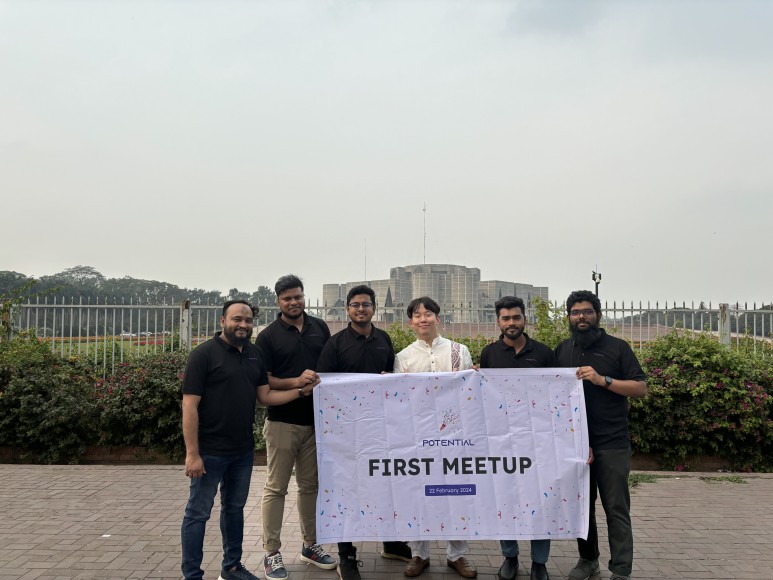
- Build it cheap, fast, and honest, and clients will love you.
- Fail to, and you'll go under.
For Korean and Asian founders expanding West, Potential (포텐셜) is the global-expansion partner that takes on the hardest problems alongside you.