{`Anatomy of the subcontracting food chain — where the client always loses`}
A Clinic Paid an Agency ₩5.5M for a Website. What Did It Really Cost?

Lukas
Jun 4th 26
8 min Read
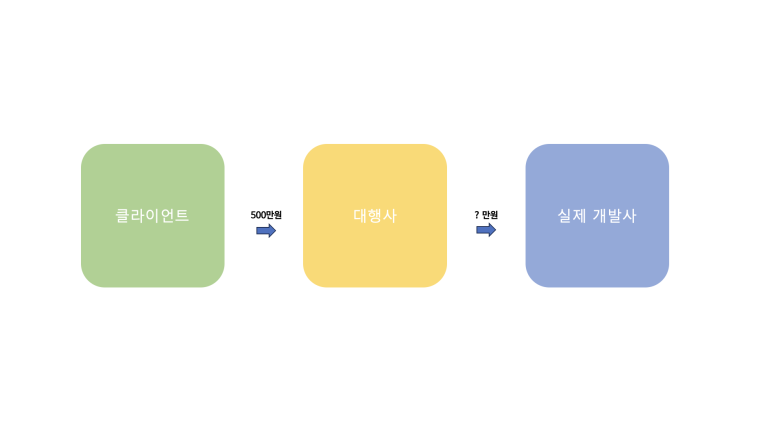
Last week I met a fascinating client. When I looked up their company name, it turned out to be a design and marketing agency. And yet, oddly, this design company was commissioning us to build a dental clinic's website. Why would a design firm commission a clinic website? Curious, I searched around — and learned this is commonly called "re-subcontracting."
The Subcontracting Structure, in Plain Terms
The client (a dental clinic) hires an agency to build their website. But most agencies can't actually deliver a project like this in-house — they can only do marketing, or only do design. So they go find another shop that can do the work. A shop like ours. And they hand it off for less than what they charged the client.
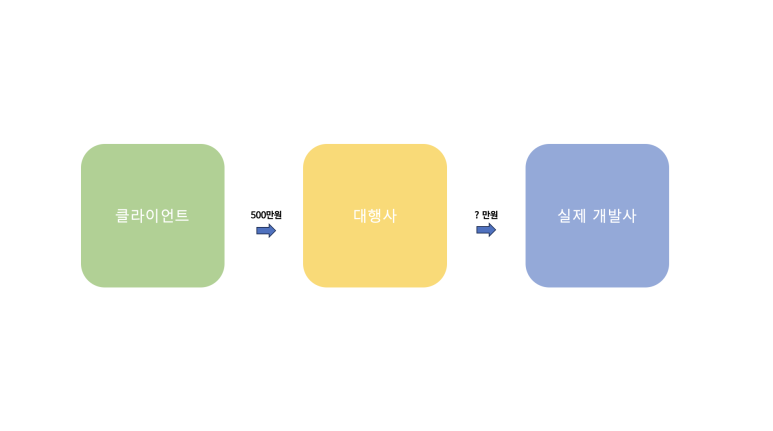
- They charge the client ₩5M (~$3.6K).
- They hand the build to another dev shop for ₩2M (~$1.4K).
- The agency pockets ₩3M (~$2.2K).
The Structure Where Only the Client Loses
In the app and website development market, this kind of re-subcontracting is extremely common. And the one who loses most is the client. They end up paying ₩3M more for something that could have been built for ₩2M.
The more serious problem starts after that. To change even one small thing, communication has to flow client → agency → dev shop → agency → client. Nothing moves crisply, and everything takes forever.

What's a "Cleanup Project"?
We usually call projects like these "cleanup projects" (literally, "dishwashing projects"). A cleanup project is one a dev shop failed to finish and ran away from, or one a shop subcontracted out because it wasn't capable enough. These often come with absurdly short deadlines and carry a lot of risk, so we generally avoid them — and when we do quote, we ask for two to three times our usual price. Because the number of shops that can actually deliver within that kind of timeline is very small.
A typical cleanup project looks like this:
The client
Furious. The project blew its schedule, so they're tearing into the agency — but they've already paid, and there's nothing they can do.
The agency
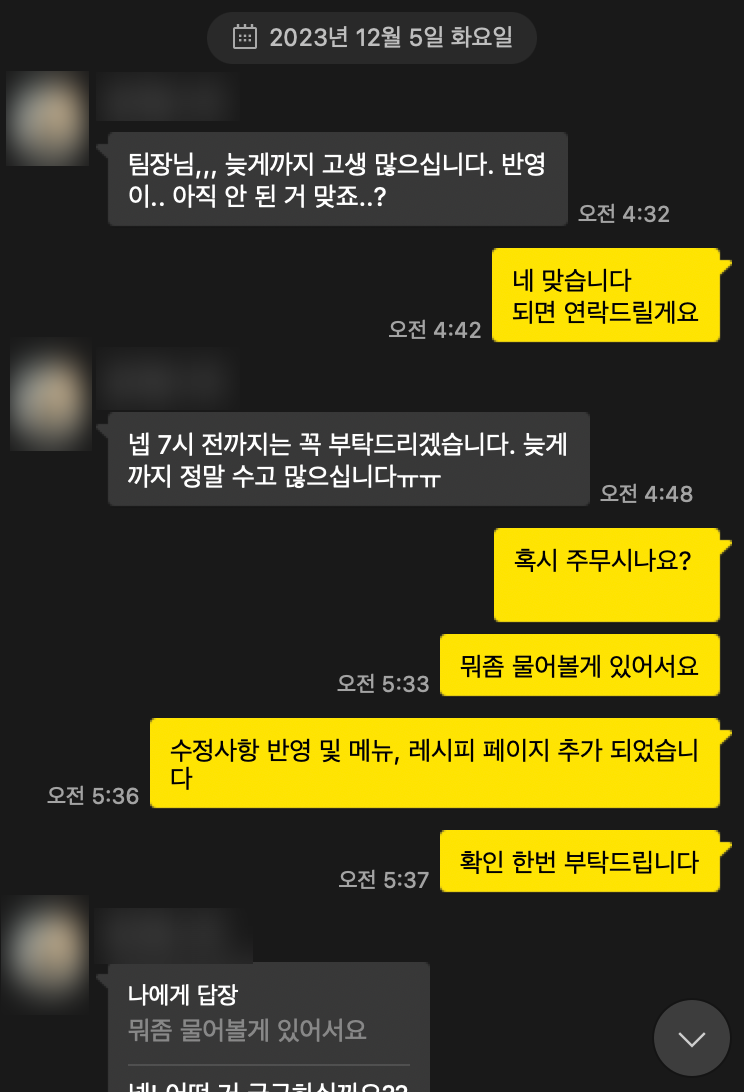
On edge. They want to calm the angry client down, but since they can't build it themselves, all they can do is beg the dev shop to somehow fix it.
The dev shop
Heads down, doing the dishes. The agency demands an unreasonable timeline, but we hit it. The faster and more perfectly we clean it up, the higher our value climbs.
At the Bottom of the Food Chain
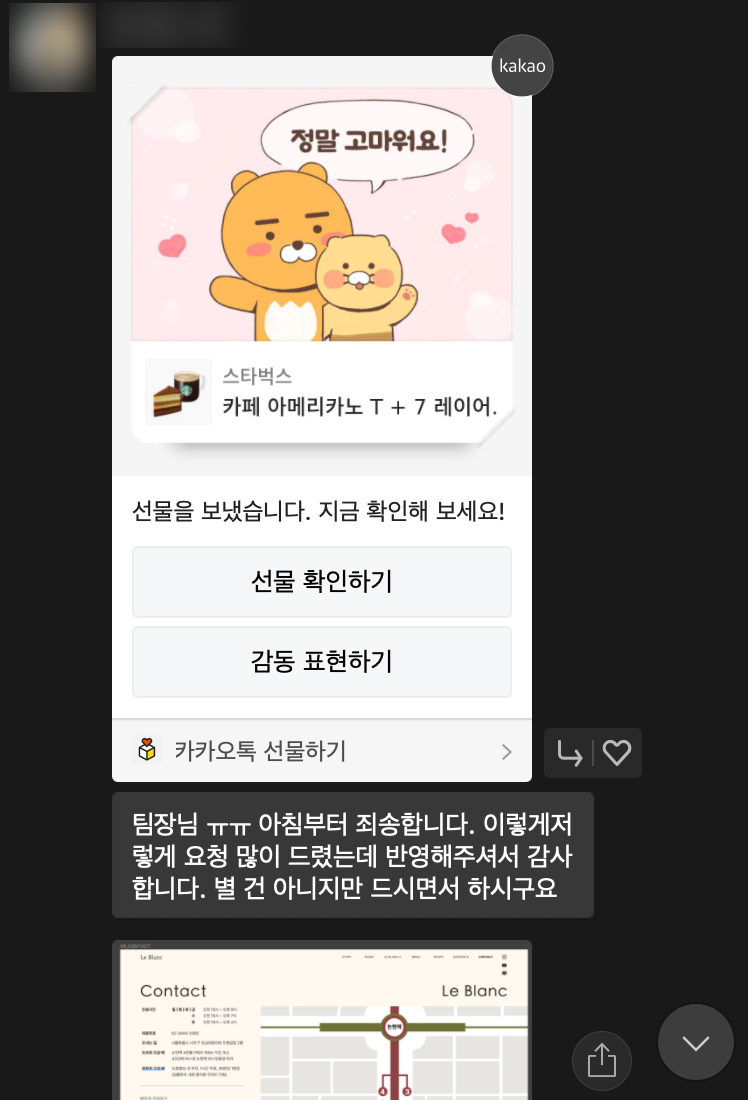
Down at the very bottom of the software-outsourcing food chain, we hold our own. Agencies racing a deadline, founders who got scammed by another shop and lost anywhere from a few million to tens of millions of won — once they work with us, they keep coming back. We're a little less hand-holdy, sure, but we build it cheap, accurate, and fast. (The project with the agency above was a 1.5-week build.)
There's no reason to pay two or three times more for the same deliverable. Potential is a development partner that works with you directly — no middlemen — and helps Korean and Asian founders expand westward. If you're wondering whether a quote is fair, reach out anytime.