{`From zero monthly income to a 20-person remote team and a bet on the U.S. market — a founder's first-year log.`}
One Year of Building Potential: From Zero Income to a 20-Person Global Software Team
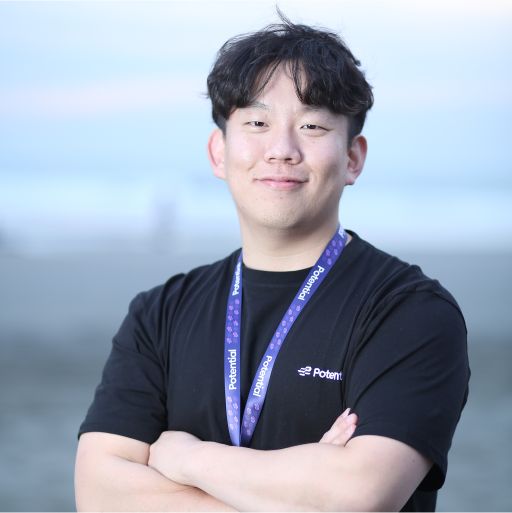
Lukas
Jun 4th 26
9 min Read

It's already been a year since I started this business. I'm not sure how the time passed. I want to keep as detailed a record as I can. Here's a look back at my first year in app outsourcing — from zero monthly income to a 20-person team in Bangladesh, and the beginning of a bet on the U.S. market.
Two Months Before My Son Was Born, Earning Nothing
Around last spring and summer I joined an accelerator program called Antler. I met a lot of impressive people and learned a great deal. I co-founded a company with someone from the group, but like most co-founding stories it didn't end well, and I had to find a new way to put food on the table. It was exactly two months before my first child came into the world. My monthly income was zero.
I set aside all the talk of vision and philosophy and made my family's survival the top priority. I listed out the skills I had and decided to do whatever could generate cash flow fastest. That turned out to be app and web outsourcing. I had no grand ambition to build a big company, and no philosophy. I just needed to earn enough to buy formula.

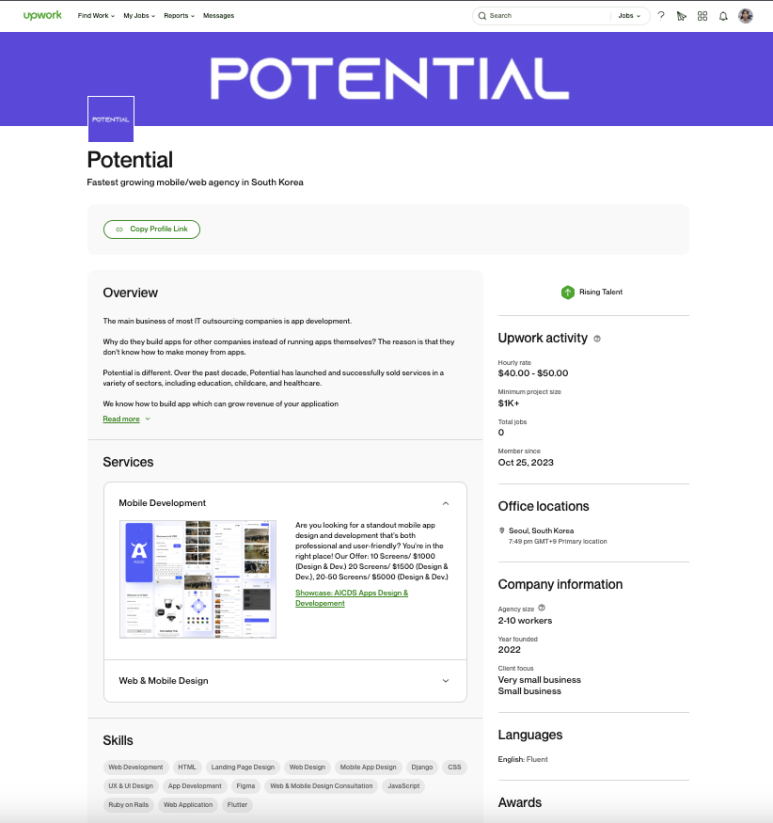
I posted my first listing on Kmong and Soomgo, Korea's freelance marketplaces. I wrote the service description and the title, picked the thumbnail image, and drafted a script for handling client chats. That single page was the beginning of Potential. I'm deeply grateful to Kmong for letting me dream big.
Books, Books, Books — How I Closed My First Deals With No Marketing Budget
Whenever business gets hard or money runs short, I have a habit of reading. Usually I don't feel the benefit of books at all — but when I was setting up my Kmong listing, they helped enormously. I worked everything I'd learned from books into the hook messages, the chat scripts, the thumbnails. As a result, even without spending a won on paid marketing, I was able to sign a lot of clients.
I took on everything, from small ₩500,000 (~$360) jobs to large ₩20M (~$14.5K) ones, and I coded 24/7, all month, without rest. Building everything solo, my product velocity was extremely high. Most landing pages or funnel pages I'd ship in a day; somewhat larger apps in three weeks. The "wow" experiences I gave clients looked like this (sadly, it's now hard to deliver experiences like these — more on that below):
- They messaged me at 2 a.m. and got a reply straight from the developer (me).
- I finished a demo in one week, and the client used it to raise funding.
- Half the cost, twice the speed.
- I took over a project another shop had started but couldn't finish — very cheap, under ₩10M (~$7.2K), and done in two weeks.
These wow experiences naturally turned into referrals, and even with almost no marketing, the work kept coming. First-month revenue hit around ₩28M (~$20K), and my wife and I went out for omakase. The formula problem, for now, was solved.
Books that helped:
- You Can Negotiate Anything, Herb Cohen
- The Laws of Sano (Korean bestseller)
- Made to Stick, Chip & Dan Heath
From Freelancer to Business — Why Bangladesh
I knew from the start this business model is hard to scale. I wanted to try anyway. I asked the mentor I always turn to. His answer: "Find the best practice — the shop that grew the biggest starting from a freelancer like you, and study it." I looked into Korean and overseas software-services firms. The ones that impressed me most were Vietnamese.
I thought a lot about how to grow a team. Unfortunately, in Korea there's no example of a software-services firm clawing its way to large-enterprise status on its own steam. Which means I, too, would very likely fail to scale the way other agencies have failed. So I dug into international cases. There were many success stories in India and Vietnam — Infosys, founded with $250 and now doing $18B in revenue; FPT, which started in IBM computer distribution, moved into IT outsourcing, and is now a top-20 company by market cap in Vietnam.
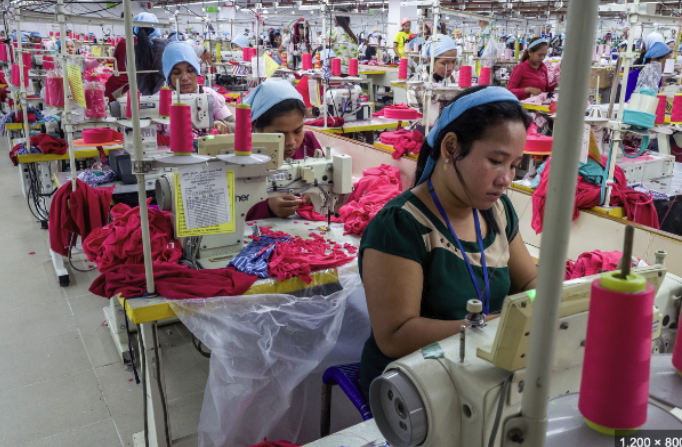
The more I looked, the more I noticed a pattern: IT outsourcing keeps migrating to ever-cheaper countries. It started in China, moved to cheaper India, and these days Vietnam — centered on Ho Chi Minh City — is hot. The more interesting fact is that another industry follows almost the same pattern: garment manufacturing. It started in Korea, passed through China and India to Vietnam, and today Bangladesh is the world's second-largest garment producer.
I bet on Bangladesh as the "next Vietnam" for IT outsourcing. Garment manufacturing and IT may look completely different, but they're actually quite similar. Both are highly labor-intensive and can be started with no capital. And thanks to YouTube, access to high-quality educational content has risen so much that anyone willing can learn.
In short:
- I was curious where IT outsourcing would go after Vietnam.
- Garment manufacturing and IT outsourcing turned out to be similar.
- My gut said Bangladesh.
I still remember July 22nd. With no English skills and never having hired anyone before, I hired my first employee — a Bangladeshi designer. I didn't know how to run a hiring interview, how to work with a designer, or how to be a good leader. I still vividly remember the interview with Fahad, the designer. Even though I was the one doing the hiring, I was incredibly nervous. Fahad, by contrast, was poised and impressive. I don't know what he saw in this fumbling founder that made him agree to be the company's only employee, but Fahad is now a treasured colleague and friend.
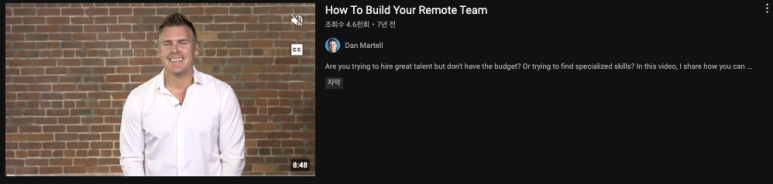
I learned everything from scratch. I searched Google and YouTube for remote-first companies and copied them diligently. Even now, when I don't know something, I search "How to..." on YouTube or Google, and most of my questions get answered. The keyword "Bangladesh" was set; all that was left was to move forward.
From 1 to 20 — The New Wall Called "Systems"
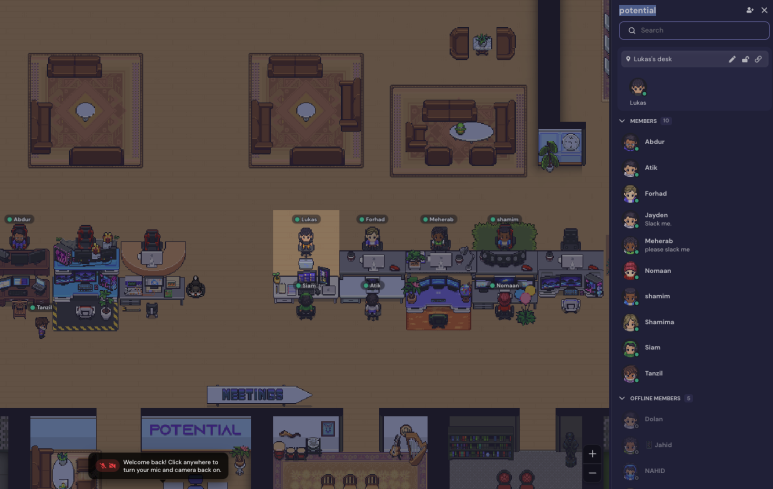
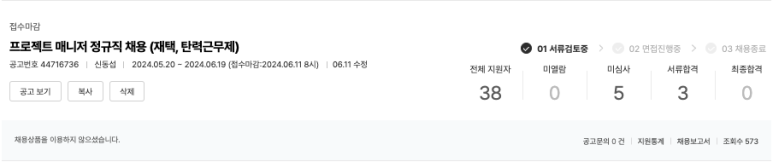
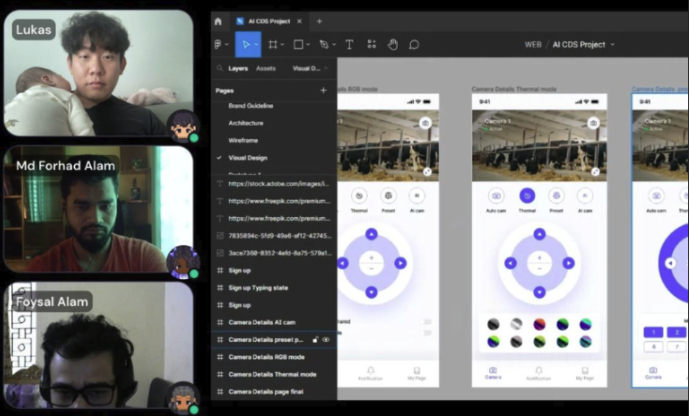
We work in a charming little remote-work environment called Gather. From a single person, Fahad, the team has now grown to around 20. I still remember the advice my mentor gave me in the early days: "Trust me and just hire one person, please. Everything will change." As always, he's never once been wrong. That first hire terrified me; now I hire aggressively. My goal is to build a software factory, and to compete with the factories in Vietnam and India, I need at least 300 people. Every won I earn, I reinvest straight back into hiring.
As headcount grows, unexpected costs keep appearing. The list of SaaS tools keeps expanding, and fixed costs creep up. One ironic thing I discovered as we grew: with more people, we don't hit the development velocity or performance I had when working solo. Compared to when I developed while communicating 1:1 with clients, a lot of inefficiency crept in. Where I used to just imagine something in my head and immediately show it as an app or web page, now everything has to be written up in documents — and even in English.
Early on, with no systems in place and headcount rising, there was a lot of internal chaos. I felt like I was grinding myself to the bone, insanely busy, yet the work wasn't moving forward.
In my tenth year as a founder, I started thinking about "systems" for the first time. It was a domain I'd never worked in, so it felt deeply awkward. But with the help of books and mentors, I muddled through.
- High Output Management, Andy Grove (Intel)
- Grinding It Out, Ray Kroc (McDonald's)
These helped a lot. There's still a long way to go, but things are better now. Every process in the company has to be written up as a manual. I'm scatterbrained, lazy by nature, a hardcore "P" personality — terrible at this kind of thing — but I learned a lot.
If I had to name the single biggest accomplishment of the past year, it's that the team is now set up so I don't have to write any code at all. The pace is slower than in my solo-developer days, but we have something resembling a system now. (Of course, I'm still just as busy with everything else.)
How Do I Grow This in Korea — The Wall of Public Bidding
Once we had 7–8 projects running at once, internal confusion set in. The developers are all in Bangladesh, and I was running all the project management myself, so things started slipping in every direction. I'd hit another wall. What now? My conclusion was to hire a project manager and clone myself.
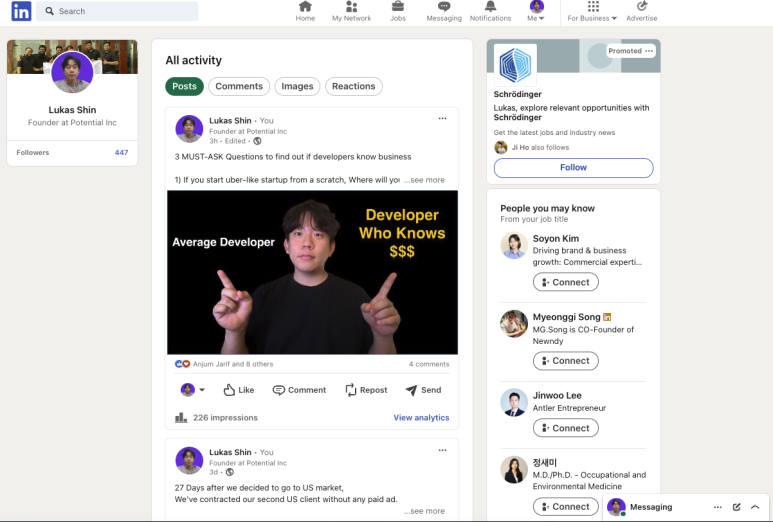
I made my first Korean hire. Posting on JobKorea, conducting interviews — all of it was new to me. Having never worked at a company, I had no sense of how good companies operate. To my genuine surprise, many people applied, and after a lot of deliberation I hired a complete entry-level candidate with no prior work experience. My intuition played a huge role in the decision.
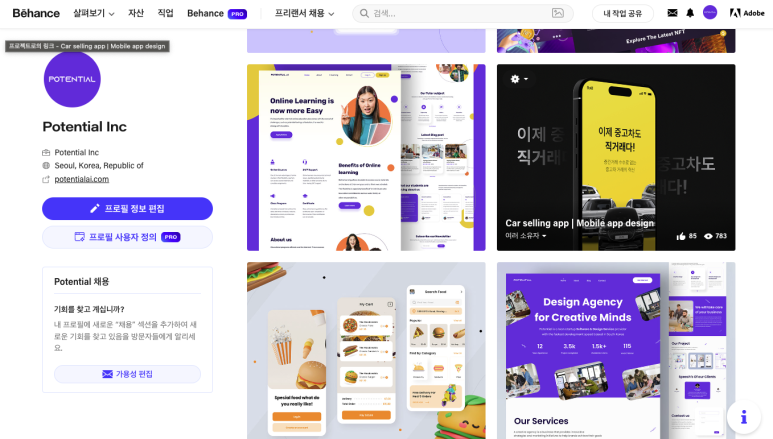
Working with that junior PM, I realized that no matter how skilled a project manager is, it's inherently less efficient than having the actual developer communicate directly with the client. I had badly underestimated how much my ability to run many parallel projects in the early days came from developing and communicating with clients myself.
On top of that, in Korea once a project crosses a certain size it becomes a public-bidding business, and the evaluation criteria work against us — number of developers registered for the four major insurances, company size, years in operation. Considering all that, growing in Korea might just be my own ego talking.
How Do I Grow This in the U.S. — A Base Camp Appears
I knew I had to go to the U.S., but I had no idea where to start. Honestly, even I wouldn't want to hand development to a company run by a founder whose English is as shaky as mine. The need to go was crystal clear, but the path wasn't. Then something I can only describe as luck happened. Early on I'd posted a few times on EO, a Korean startup community, and a Korean-American who runs a printing factory in California saw one of those posts and reached out.
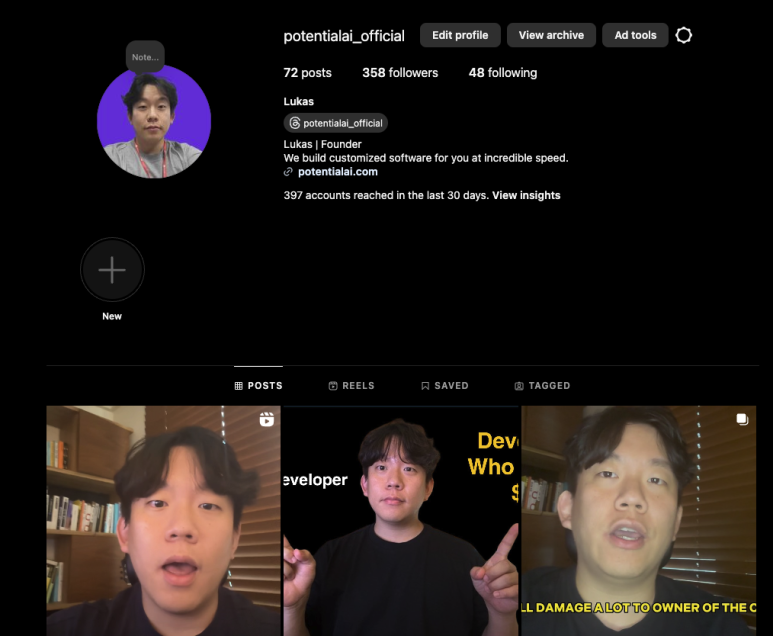
He was Korean, but having lived in the U.S. for a long time, he preferred to communicate in English. For us, this was a golden opportunity — a kind of base camp where we could work with an American company entirely in English and start networking. It was an opportunity we absolutely could not miss, and I prepared an English sales pitch with everything I had.
Gratefully, we won them as a client. Encoding every process of a printing factory into software is a genuinely difficult project, and actually doing it gave me a lot of confidence.
Plenty of other strokes of luck followed. A Korean founder based in Japan reached out and we ran a project together. We're no longer growing our Korean client base; we're focused on the U.S. market. I believe the next year — the contest in the U.S. — will decide our company's fate.
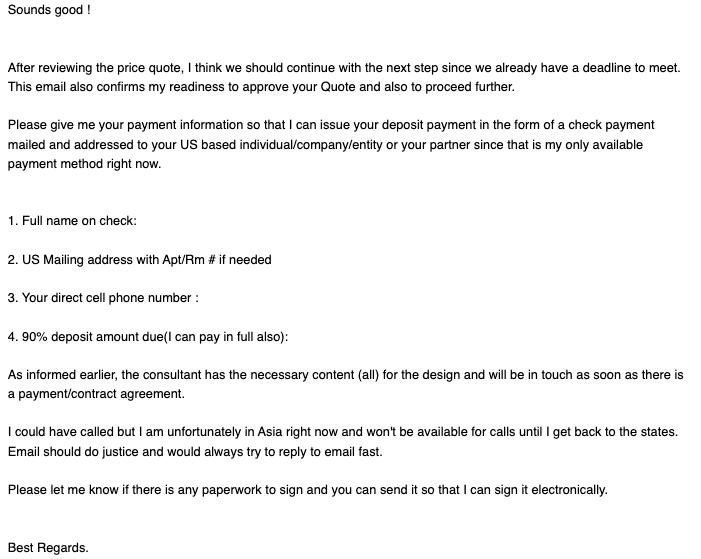
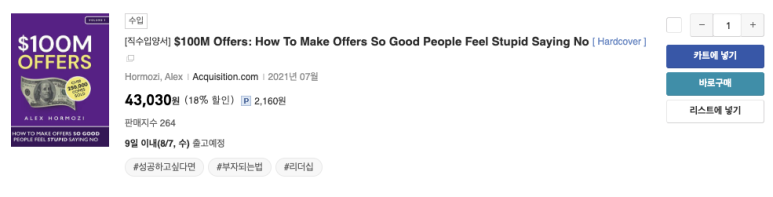
In a video by the YouTuber Alex Hormozi, I once saw the line "Volume can make luck." Hormozi's advice is simply to do a lot. Smart people preach "work smart," but an ordinary person like me has no choice but to compete doggedly on volume. My view counts and follower counts are pathetic, but bit by bit I'm seeing signs that something is coming together.
Setbacks and Hardships
Three layoffs. The reasons varied. Some had great attitudes but lacked skill; some were highly skilled but had poor attitudes. Whatever the reason, letting someone go is never easy. But it's something you have to do.
Choked cash flow. On paper our operating margin might look great, but cash often didn't arrive on time, which made things hard. In particular, I failed to account for VAT, and this VAT filing was brutal.
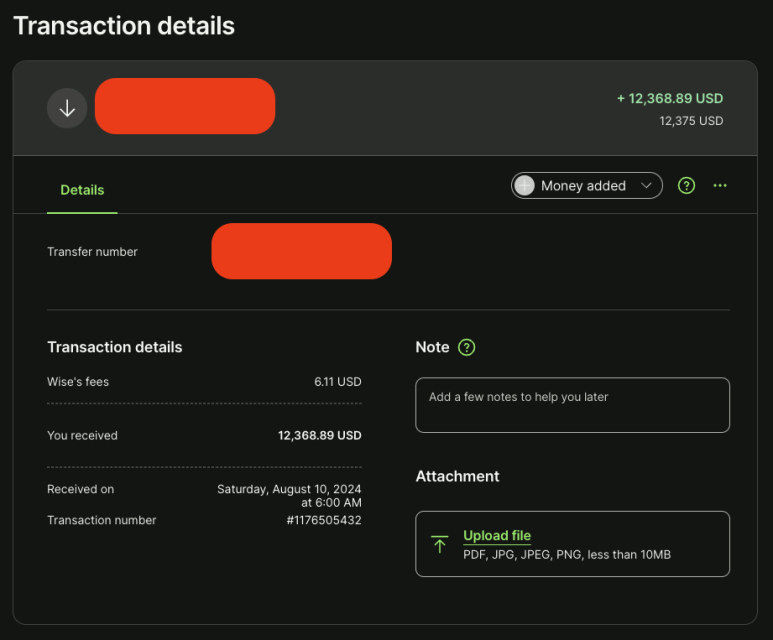
Trouble in Bangladesh. Student protests in Bangladesh led to roughly two weeks of martial law and an internet shutdown. Not knowing when it would lift, and unable to reach the Bangladesh team, I went through a genuinely difficult stretch. It's resolved now, but the stress kept me up at night.
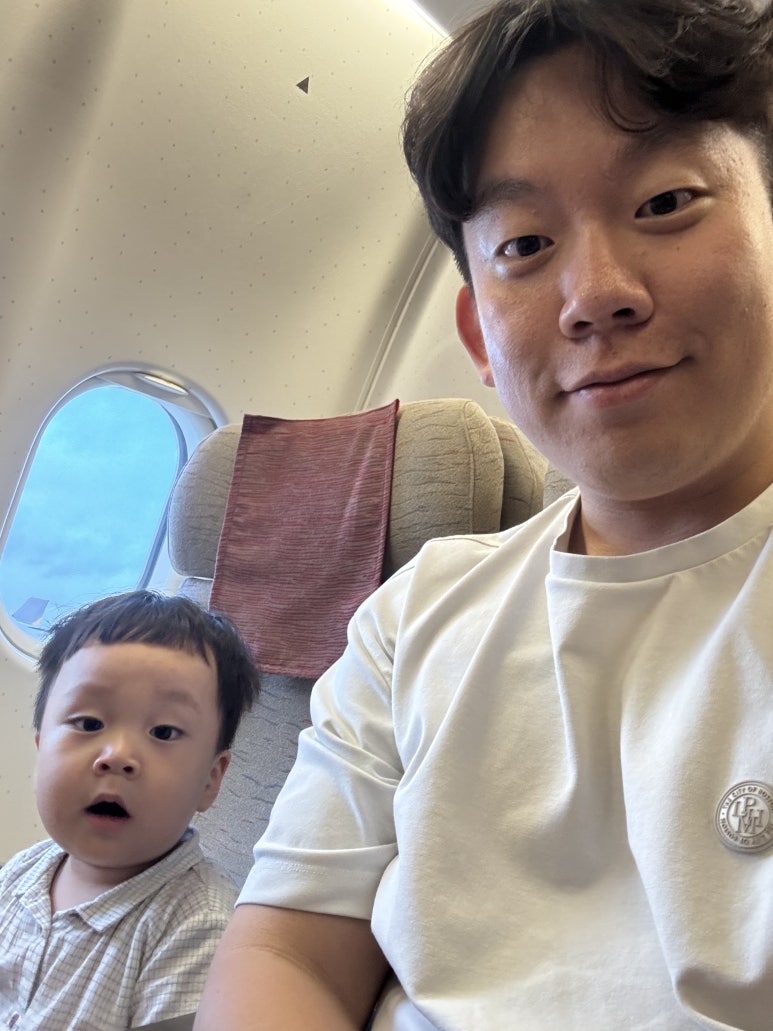
Raising a child while building a company. Since I was the one who pushed my wife to have a child, I had to be deeply involved in parenting. I kept strict 9-to-6 work hours and spent the rest of my time on childcare. Sleeping next to my child at night gave me an irregular sleep pattern and insomnia, which was very hard. Growing a company on just 45 hours of work a week isn't easy. But I have to make it work.
Unpaid balance. I never collected a final balance of around ₩10M (~$7.2K). I figured this day would come eventually — it just came sooner than expected.
This Year's Goal
The goal is $1M in U.S. revenue. If I just do my part, it's a perfectly achievable number. Last year's version of me couldn't have imagined where I am this year. There's plenty of stress and plenty to do, but I'm genuinely excited to see what my team and I look like a year from now.
Potential is exactly this — a global-expansion partner that starts in Korea and pushes into the U.S. market. If you're a founder walking a similar road, I'd love to talk anytime.