{`Revenue is never just a number — where and how you earn it changes everything.`}
How We Sold Software to America and Earned Our First $50K
Lukas
Jun 4th 26
8 min Read
When we started Potential in earnest last August, the team had one goal that never wavered: sell software to America. Earning our first $50K from the U.S. took failing on nearly every channel — until a single buried message changed everything. Here's how it happened.
I believe revenue is never just a number. ₩30M earned in Korea and US$25K earned in the U.S. may look similar on paper, but they mean completely different things.
What selling software to America actually means
Being able to sell software to the U.S. carries several meanings:
- First, that our team's competitiveness has risen enough that a distant Korean company — one that can't meet in person and isn't fluent in English — is worth trusting with the build.
- Second, that if we can do it there, we can do it in any country.
- Third, that we've taken a very, very, very, very small first step toward competing with the shops in Vietnam. (For reference, Vietnam's FPT does about US$1B a year.)
Because selling software to America means that much to us, we've poured a lot of effort into it.
Almost every attempt failed
Upwork, the infinite-competition market
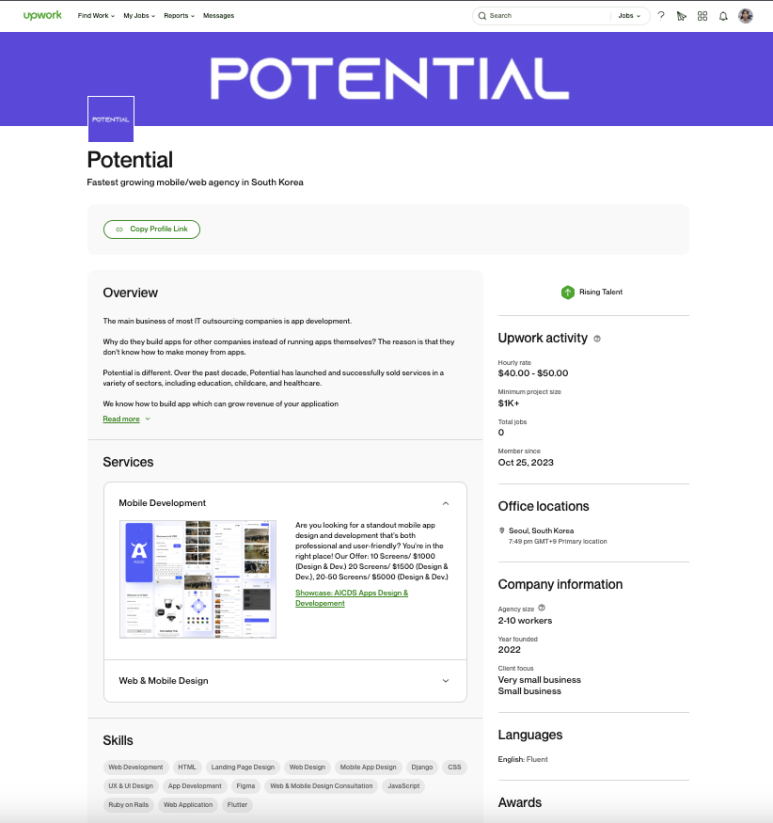
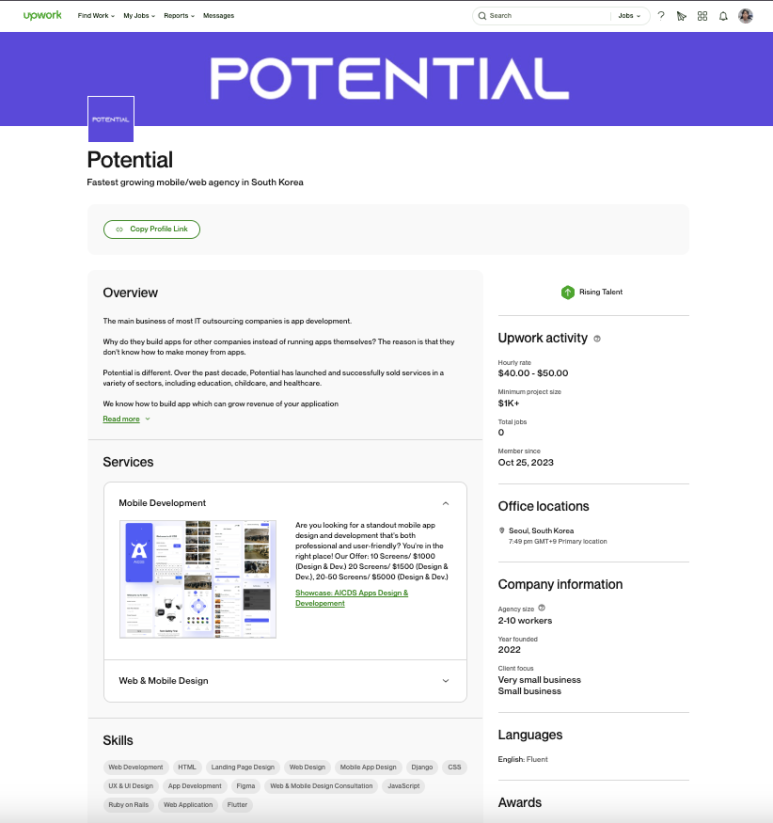
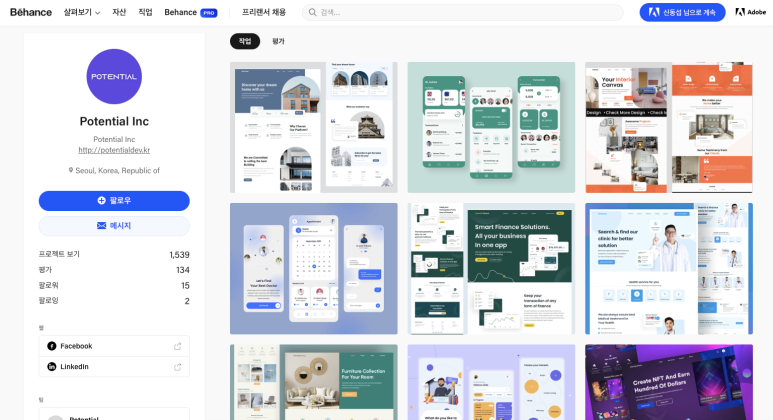
We opened an account on Upwork — the apex of freelance marketplaces, famous for brutal competition — and diligently uploaded our portfolio. When we set up the agency account, we weren't thinking about money at all. We were happy to win work at rock-bottom prices just to gain experience working with overseas clients. Even that didn't work. Project inquiries through Upwork: zero.
Managing our Dribbble and Behance portfolios
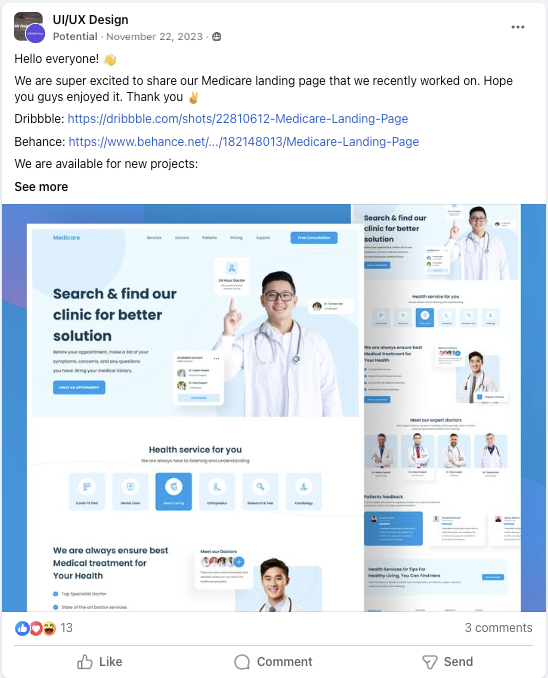
In the Korean market, breaking into design work had naturally led to software projects, so we uploaded to Dribbble and Behance relentlessly. Pohad, who'd generated plenty of leads on Dribbble and Behance before, pushed hard for this, so our hopes were high. A few portfolios did occasionally pop in likes and views — but none converted into an actual project.
Posting portfolios to Facebook, Instagram, LinkedIn
We tried every social network we could to make our existence known — uploading portfolios, uploading company news. Honestly, we didn't expect much. What we're best at is enterprise-level applications with heavy customization, like ERPs and CMS platforms, and those are hard to grab attention with at a glance and hard to target an audience for. Again, the effect was zero.
Going niche: Dubai real-estate agencies
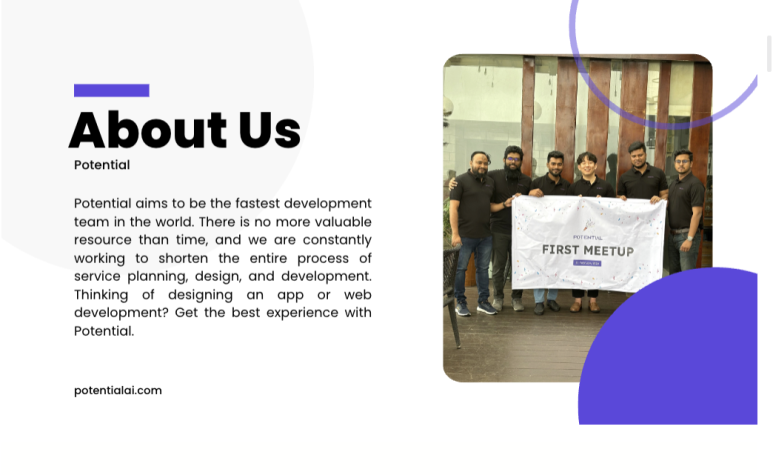
When all of the above fell flat, it became clear that the generic, everyone-does-it approach wasn't going to win global work. The idea of targeting only Dubai real-estate agencies came from our teammate Anik. Despite relatively high revenue, many Dubai firms were running nothing but template-based WordPress — so pitching concepts already proven in Korea, like Zigbang and Hogangnono, seemed well worth a shot.
We went the exact opposite direction from the generic approach: pick one company and treat it like royalty — super-ultra-customized marketing. For each chosen firm we hand-crafted a 20-slide proposal, spelling out why their website was a problem, what would change if we helped, and exactly what they'd gain.
There were no economies of scale, and if one company said no, the whole thing got thrown away — pure grind. By the usual arc of a blog story, this is where it should have landed a deal. Sadly, it didn't. But I still think it's an approach worth trying again.
A referral through our network
Maybe because we'd always worked honestly, the companies we'd worked with referred us widely to others. One of them, very kindly, introduced us to a Singaporean healthcare company. We even made it through a second Google Meet — but it was dropped due to the founder's circumstances.
One message hidden among the spam
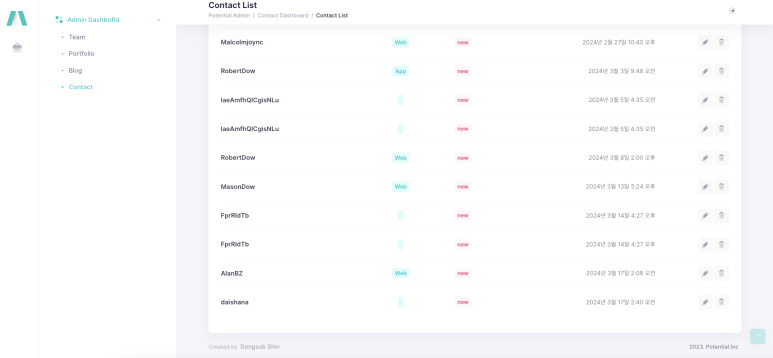
Just when none of our attempts were landing, one day a "1" appeared in our company contact database. I emailed the company back and found it was a printing business that had run in California for 30 years. Over the last decade a developer had left their code so messy that updates were now nearly impossible, and they wanted a fresh e-commerce + ERP build. Along with a short but earnest reply — "we think we can help" — we pulled together everyone we could spare and started picking apart this company's e-commerce and ERP structure, corner by corner.
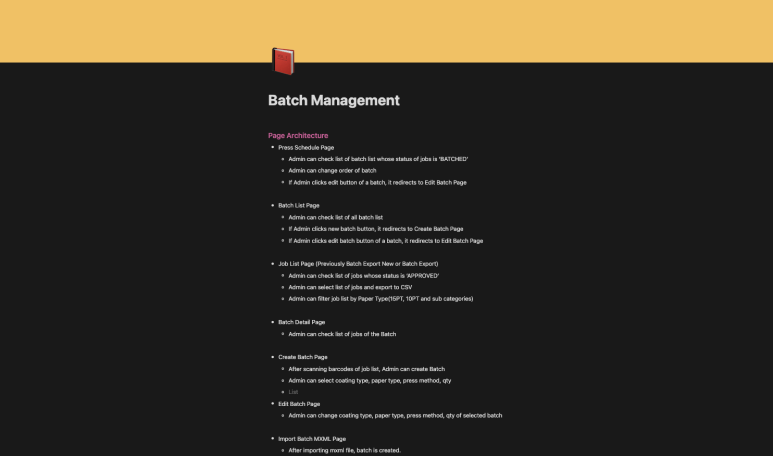
Maybe because we'd cranked out so many proposals during the Dubai effort, we'd built an internal knack for it, and within hours we had a solid proposal. Very kindly, the founder requested an interview. I'd never once been nervous before — and I walked into that meeting shaking. It was officially our first meeting conducted 100% in English with a "client."
The prep paid off
Fortunately, the meticulous up-front analysis of the client's project structure paid off. The printing industry demands processes far more complex than they appear. The number of item variations runs into the tens of thousands, and the workflow goes: order confirmation → pre-press → customer file review → batching (grouping items with the same paper stock and coating style) → layout (arranging items on a huge print sheet) → group cutting → coating and bindery → fine cutting → shipping. On top of that, they use countless third-party software tools, so you have to support file Export and Import in many formats to stay compatible.
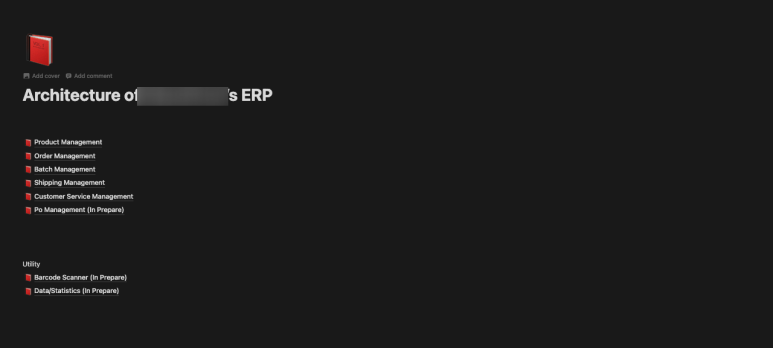
It was a genuinely hard project, but I badly wanted to win it. The client could see how hard we'd prepared, and we held two or three more Google Meets after that. We asked more questions to understand the printing-industry domain, and they responded warmly to our enthusiasm.
"You haven't been paid, you don't even have a contract — and you're doing all this?"
I wanted to beg the founder, "So work with us, then." Instead I answered flatly: "We do this for every client."
And then
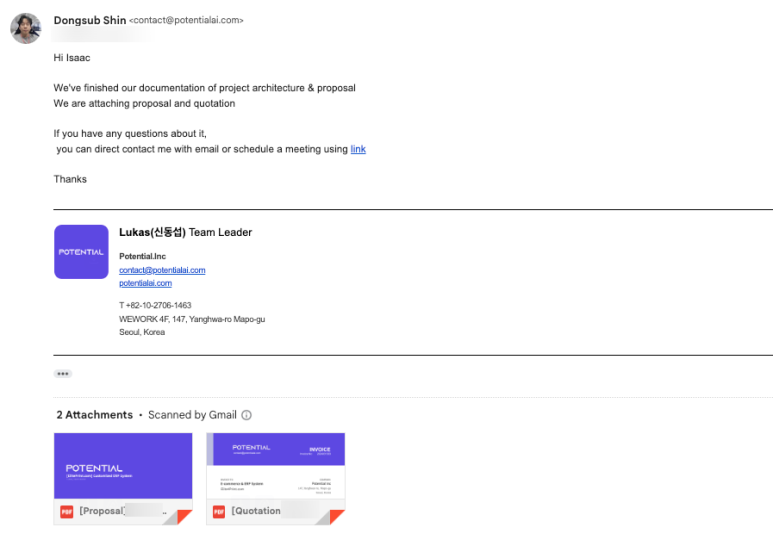
Finally we sent the company our final proposal and quote. The founder said they'd align internally and set a meeting for sometime the following week — see you then. We really can do this well; I just hope we're given the chance. Win or lose, I'll be sure to share the outcome on the blog.
For Korean founders heading toward the U.S. and Western markets, Potential (포텐셜) is the global-expansion partner that helps you prepare for that first deal.


See Other Blogs
View All