{`What I learned cold-networking with Vietnamese dev shops — toddler in tow, zero contacts.`}
Networking in Vietnam From Zero: A Korean Founder's Da Nang Trip
Lukas
Jun 4th 26
9 min Read
I started networking in Vietnam with zero contacts and not a single meeting on the calendar. This is a record of cold-meeting Vietnamese dev agencies in Da Nang — and a week that made me feel, viscerally, how easy global business has become.
Last Sunday I flew home from a trip to Vietnam. It taught me a lot — both about the business and about what actually makes me happy.
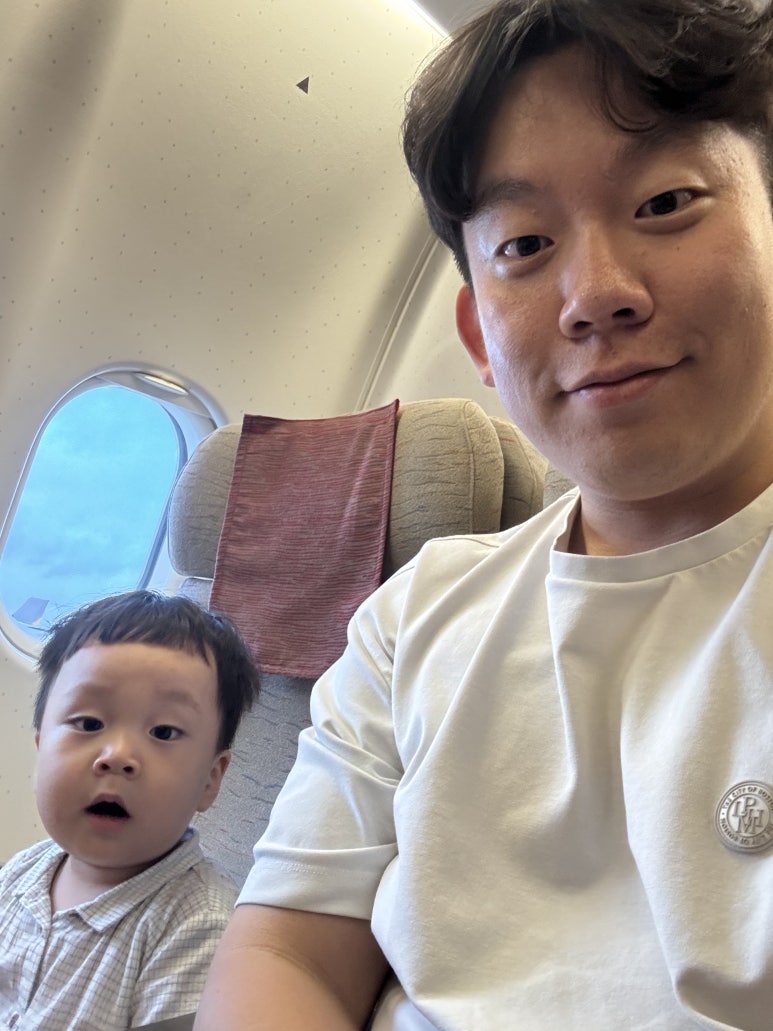
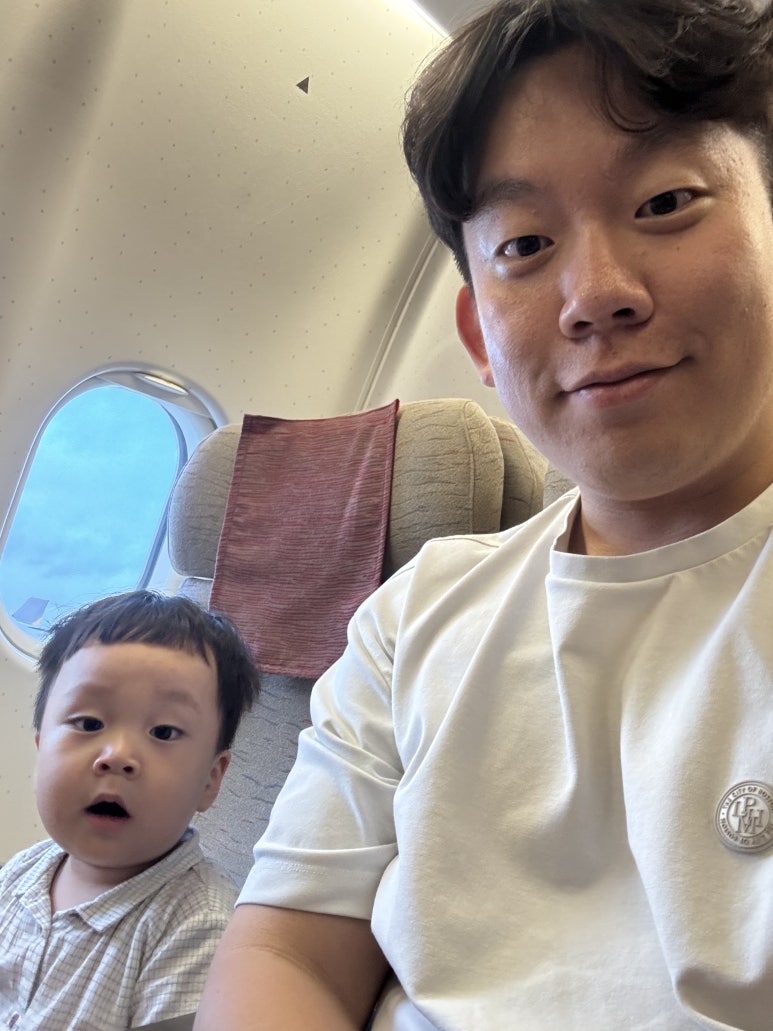
A trip with just my son
This was the first time I'd traveled alone with my son — a vacation and a business trip rolled into one. My wife was nearly due, so leaving her at home with our toddler while I disappeared abroad felt like too much. So I decided to bring him along. True to my ENFP nature, I didn't plan an itinerary or line up meetings in advance — I'd improvise as I went. The rough plan was simple:
- During my son Jaeha's nap, take a taxi out, do one or two meetings, come back.
That's how recklessly I kicked off the trip — starting from the gate at Incheon Airport.
The first thing I did after checking into the hotel was find a sitter to help with Jaeha. A Korean agency made it easy, and they assigned us Aunt Thi. I'd never used a sitter before, so handing my kid over felt a little awkward — but thanks to her, I got a lot done. I'd vaguely wondered before whether living in Singapore or Vietnam, with a sitter watching the kids, might let me focus more on the business. This trip settled that question for me. A sitter buys you ease and time, yes — but in the end, my son just wants to play with his dad.
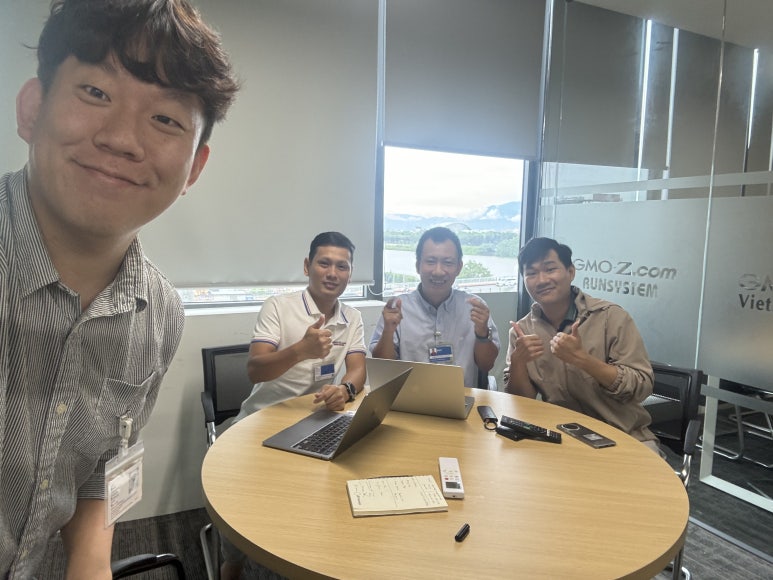
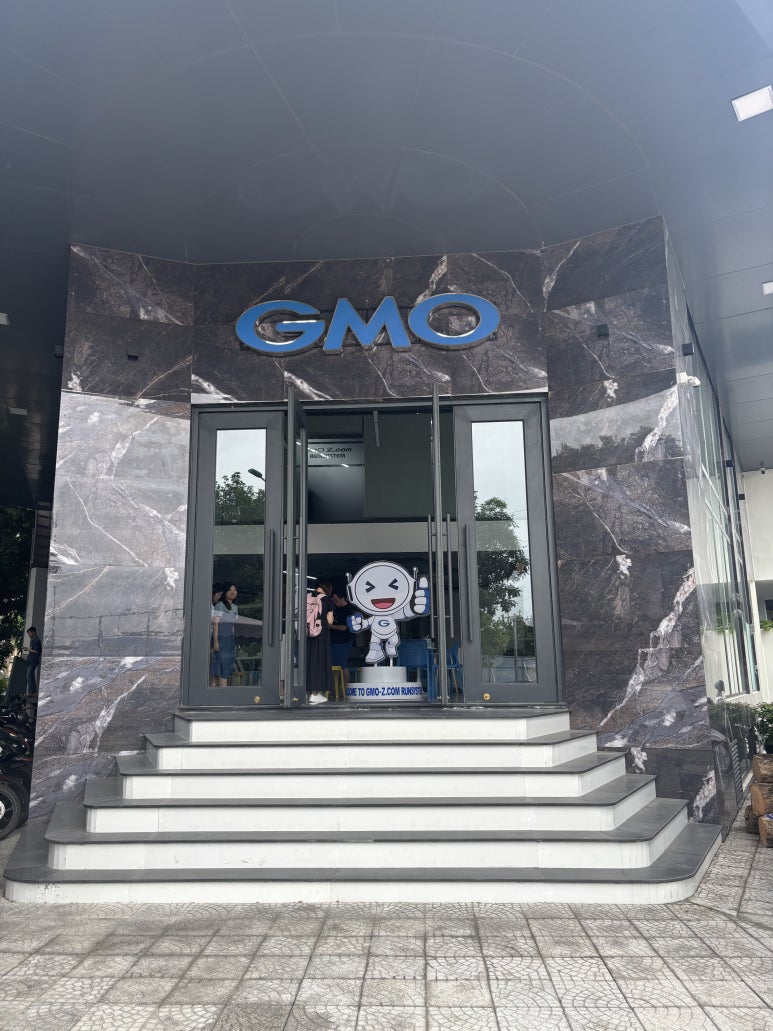
GMO-Z: 20 years of scar tissue and a 1,000-person dev team
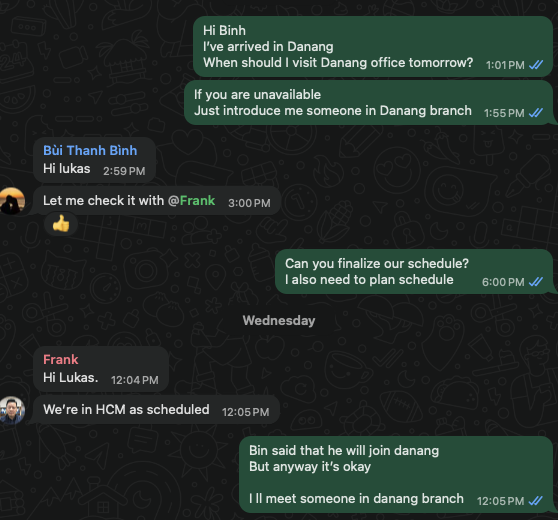
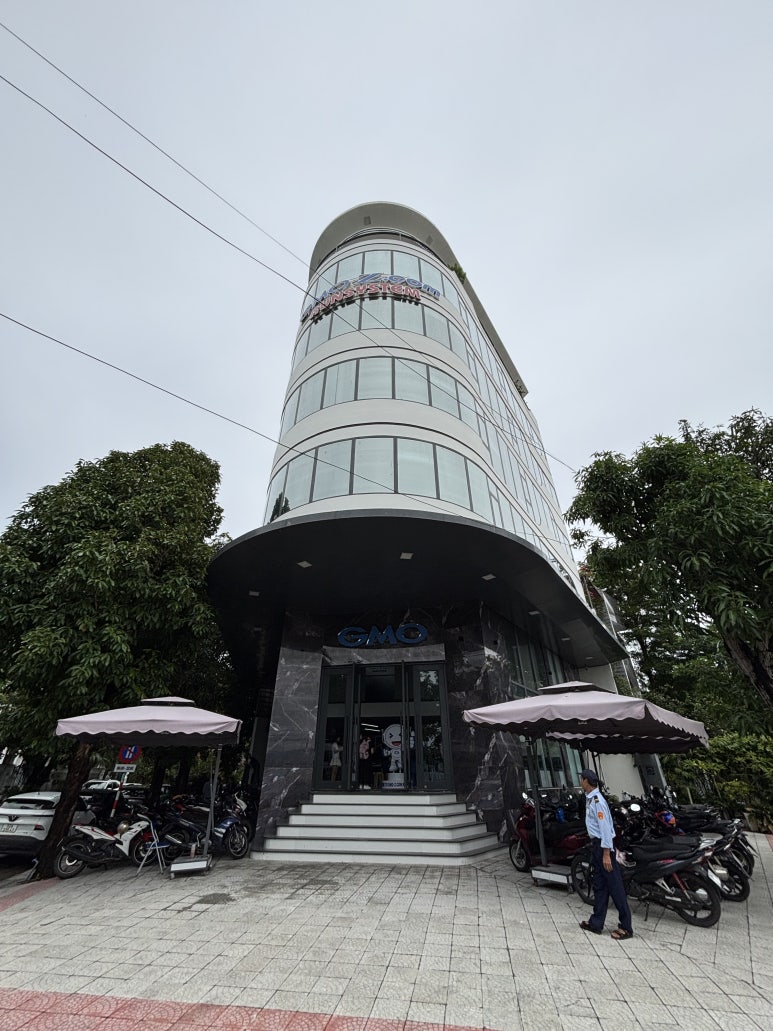
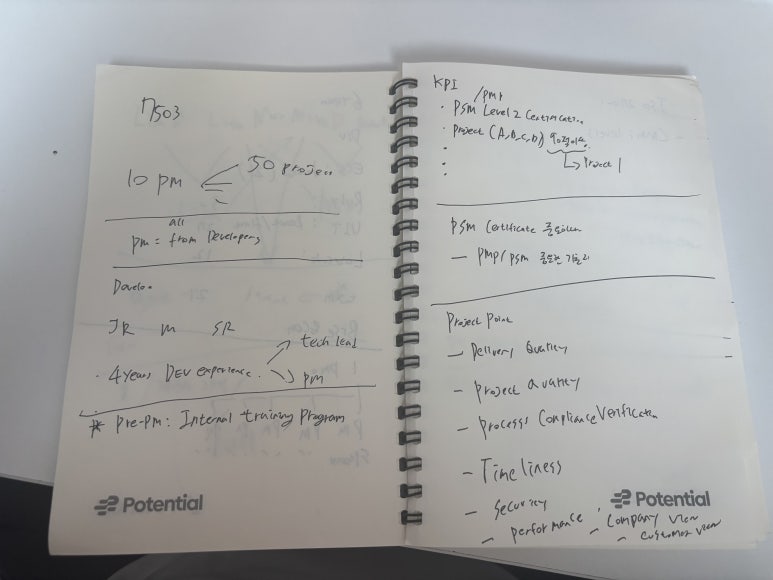
The first company I met was GMO-Z. This whole trip was actually planned because they kept insisting I come visit. With 1,000+ developers and 20+ years in the business, there was a lot to learn. My first impression wasn't great, honestly — the contact I was supposed to meet had gone silent right up until the day before. I finally messaged: "Look, if you can't make it, just tell your Da Nang office I'm coming and who I should talk to." That's when they finally replied.
After months of communicating with this company, here's my read: compared to Korea, they're relaxed — and slow. (A note for Korean founders raised on "빨리빨리" / hurry-hurry culture.)
But their internal dev operations? The real deal. Twenty years of experience doesn't appear out of nowhere. Seeing a 1,000-person team running 100+ projects in person, I realized how far we still have to go. Even when I grilled them like an industrial spy, the GMO-Z Da Nang team shared everything they knew, freely. I learned a lot just from their attitude. "When you're ever in Korea, call me — drinks are on me," I said, and left the office.
It was only back home, writing up my notes, that the regrets surfaced — why didn't I ask that one question? Next time.
LinkedIn opened the second meeting — Code Complete
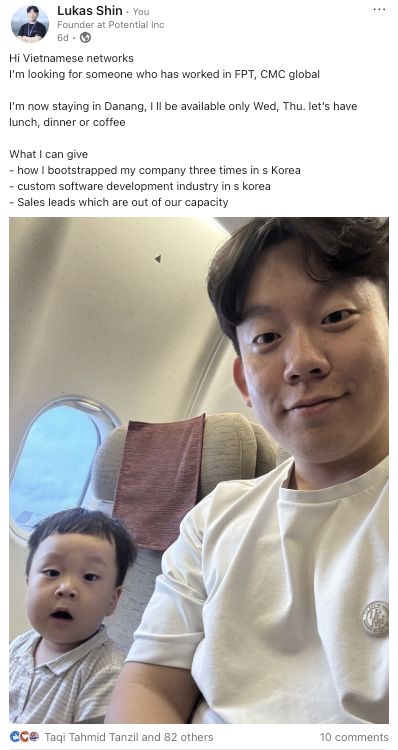
Since I was already there, I wanted to meet more companies. What makes global business so easy now is that LinkedIn alone connects you with founders all over the world. (From a Vietnamese founder's side, a Korean entrepreneur who flew all the way to Da Nang in person was probably fascinating, too.) I got a flood of replies, and out of them I picked a company in our space — but bigger than us — to meet.
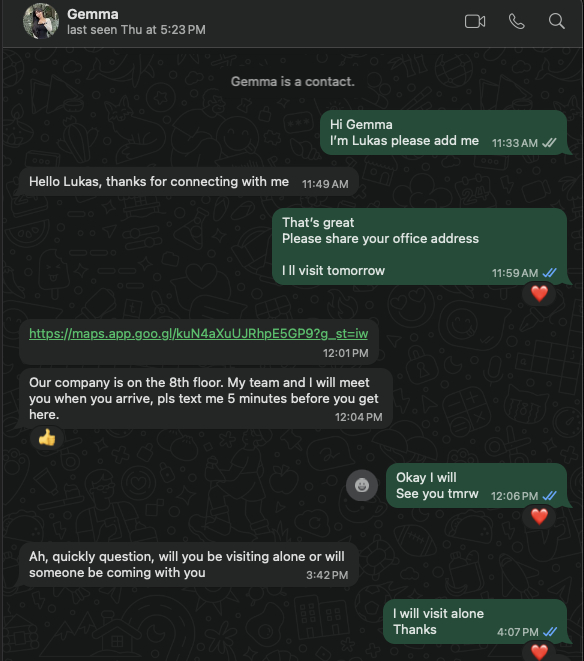
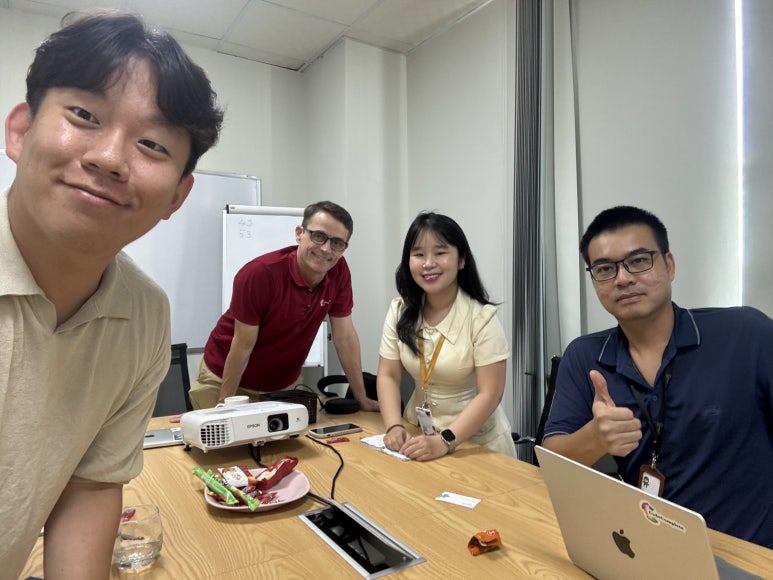
Gemma, who connected with me on LinkedIn, was warm and a fantastic communicator. At her invitation I visited a company called Code Complete, which had a lot in common with us. The founder, Simon Saeki, is Japanese, with only the dev team based in Vietnam. Most of their revenue came from Japan, so they had a lot on their mind: how do we break into the US and Europe? That's the exact question we were wrestling with a year ago. On operations — 200 developers, 10 project lines — they were ahead of us.
If at GMO-Z I'd mostly asked questions, this time I tried something different. I shared everything from our last year of overseas sales — the mistakes, what worked, what didn't — with the Code Complete team. And I told them: if you ever want to sell into the Korean market, there's plenty I can help with, so reach out.
Code Complete had a warm team culture. I was struck by how freely people shared opinions regardless of rank. (Their CTO, Viet, pressed some Vietnamese mint-flavored jelly candy into my hand, insisting I had to try it.) If I ever make it to Japan, I'm definitely meeting their founder.
The babysitter set up the third meeting — NinePlusSolution
The last company came through the most unexpected channel. Aunt Thi — Jaeha's babysitter — had actually worked as a QA engineer at FPT, Vietnam's largest IT outsourcing firm, and her husband was a front-end developer in Da Nang. (It's a small world.) Through her introduction, I got a meeting with a company called NinePlusSolution.
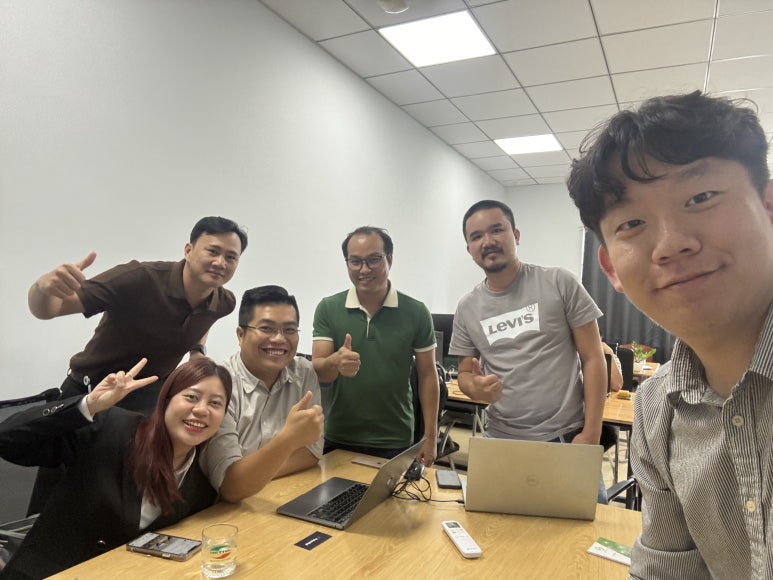
This was honestly the most fun meeting. When I first arrived, only four people were there — and none of them spoke English, so we muddled through with Google Translate and a lot of gesturing. The company builds and sells software solutions, focused mainly on the Japanese market. (It struck me that nearly every Vietnamese IT company sells aggressively into Japan.)
Then the guy in the Levi's t-shirt finally showed up — he spoke English, and we got into all kinds of topics. His English wasn't perfectly fluent, but he was a strong salesperson, and his particular energy reminded me of Rana on our own team.
The founder offered to grab a beer, but I had a kid alone at the hotel, so I had to decline and head out. They offered to introduce me to yet another company. I couldn't make the visit work around childcare, but once again I felt the power of communication — how one introduction calls forth the next.
It all came back to a book
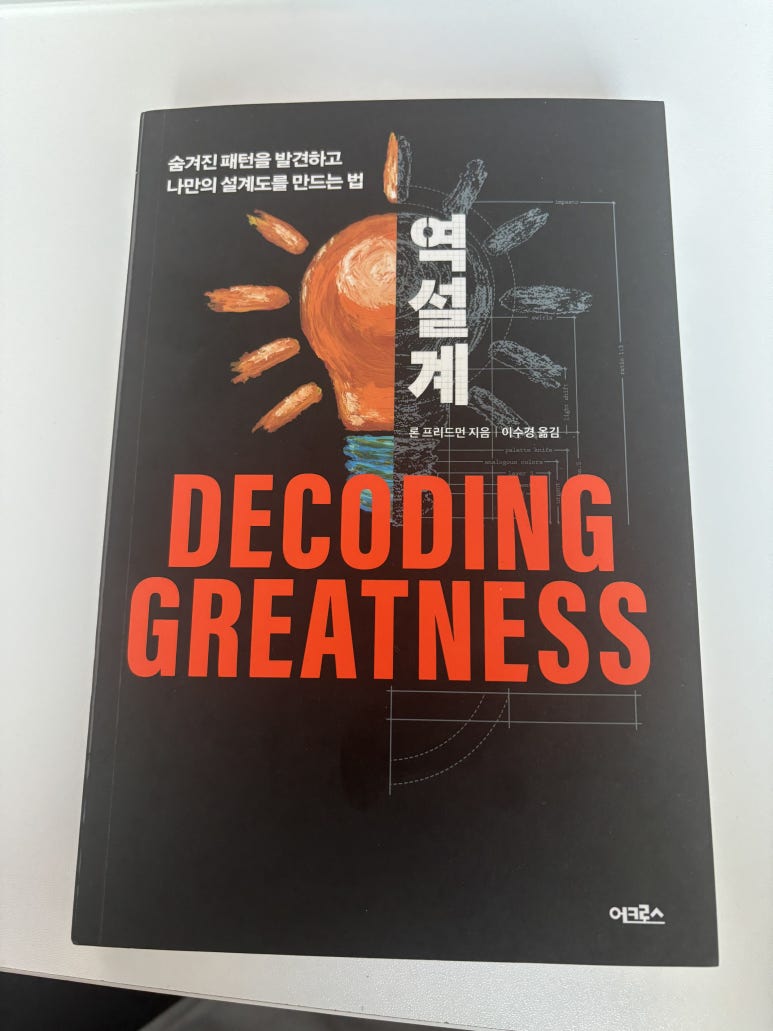
This trip owes a lot to a book my mentor recommended. Whenever I'm in financial trouble, or the company's growth stalls, this mentor shows up like Superman with an answer. It was a recommendation from someone I trust 500%, so I read it several times.
Here's my takeaway, condensed:
- Most founders believe they're smart.
- So they believe only the solutions they discovered, invented, or designed are the real ones.
- But the great solution usually already exists in the market.
- The founder's real job is to find the great solution that's already out there.
I don't believe excellence in custom software development lives inside me. I believe it lives in Vietnam.
Potential (포텐셜) is the global-expansion development partner for Korean and Asian founders building toward Western markets. If you're weighing a move abroad, let's talk.


See Other Blogs
View All