{`Leaving an easy home market for a U.S. one where nothing is proven yet — and why the ROI still points West.`}
Earning Dollars in America, Part 1: Why a Korean Agency Chose the Hard Road West
Lukas
Jun 4th 26
7 min Read
The Korean market may look easy right now, but thinking about the future, we have to go to the U.S. This is the record of why a small-town guy from Ansan who can't speak a word of English decided to take on the U.S. market alongside a team in Bangladesh — and how we took our first steps from nothing.
Why the U.S.? — The Wall of Korea's Software-Services Market
Korea's software-services (SI) market has a peculiar culture all its own. Once a project crosses a certain size, it becomes a public-bidding business. The evaluation criteria include things like the number of developers registered for the four major national insurances, company size, and years in operation. Our team is around 20 people, but only two of us — including me — are formally registered employees, so on paper we're a two-person company. We don't have an impressive office either, which makes it hard to break into the bidding market. This is also exactly why large Vietnamese or Indian firms struggle to enter the Korean market.
We could just target small-to-mid projects under ₩100M (~$72K), but coordinating between Korean clients and an overseas dev team requires a deft project manager — someone with development knowledge and an almost animal instinct for communication.
Then, by chance, we won a contract with a California printing factory. It was the first project to run on the team alone, without a Korean project manager (me) in the middle. Removing just one layer from the chain — dev team ↔ project manager ↔ client became dev team ↔ client — made communication dramatically easier, and the project flowed far more smoothly. With a senior developer managing directly, internal communication got faster, and there was no need to add staff. I'd tasted a whole new world.
So I faced two roads: focus on Korea, which is working but whose ceiling is clearly visible, or take on the U.S., where nothing is proven yet but the upside is huge. After long deliberation, I chose.
The "Triumphant Return" Strategy — The ROI Points West
No matter how hard you grind in Korea, unless you reach Samsung-SDS scale, there's little advantage to be had for entering the U.S. market. Whether you do ₩1B, ₩10B, or ₩100B in Korea, you start from the bottom all the same. But conversely, if you do more than $10M in the U.S. market, then — given how much Koreans respect Silicon Valley and the U.S. itself — you can carry enormous authority back in the Korean market. So succeeding in the U.S. has a far higher ROI. The Korean market may look easy right now, and the U.S. may look hard right now, but thinking ahead, we have to go to the U.S.
From Scratch
There are a few English phrases I love, and "from scratch" is one of them. A small-town guy from Ansan who's never once been on a flight to the U.S. has to take on this challenge alongside teammates in Bangladesh. I genuinely had no idea where to start, yet I wasn't worried. This is a fairly safe challenge with a very high floor on failure — and the floor, as I see it, is "business English that improved without spending a dime."
Finding a Mentor — Copy the Best Practice
While agonizing over where to begin, I remembered the advice my go-to mentor always gives: "Find the best practice and copy it." So I went looking. For me, the best practice was an agency founder who had grown a company from $1M to $10M. Along the way I came across a YouTuber, and I paid the largest sum I've personally spent in the last decade to join his training program.
Finding Books
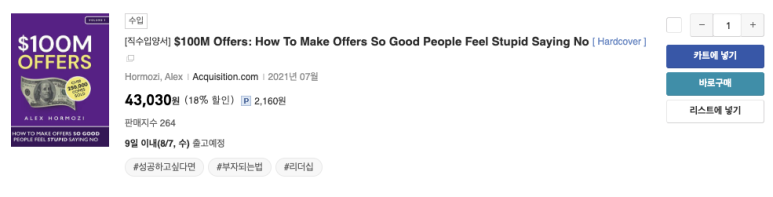
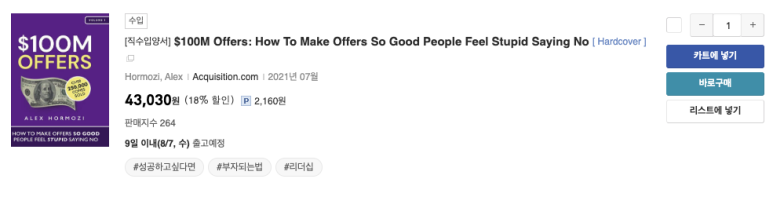
There's no investment with a higher ROI than books. You can buy the experience of someone far better than you for less than ₩10,000 (~$7). To get more comfortable with English, I bought an Amazon Kindle and picked up $100M Offers by Alex Hormozi, who's been dominating the YouTube algorithm. A wonderful book by a fantastic operator. Buy it directly on Kindle and it's about ₩12,000 (~$9). I intend to copy every single one of his tactics.
Executing the Mentor's and Books' Lessons
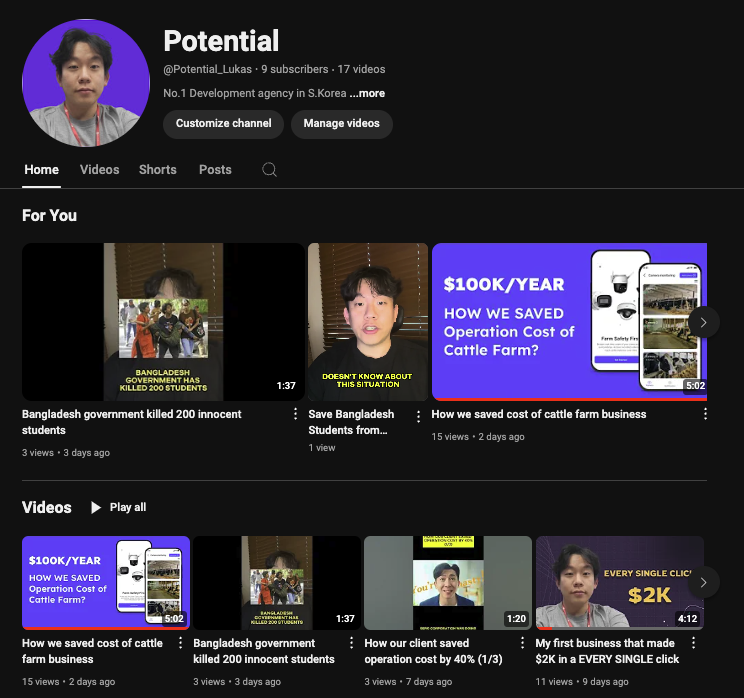
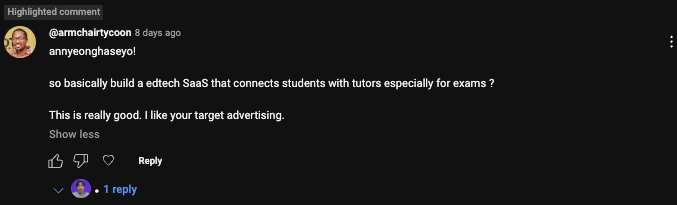
YouTube / X (Twitter) / TikTok / Instagram / Threads. My pronunciation is genuinely bad, but pronunciation doesn't seem to matter that much. I followed the lessons of my blue-eyed teacher, Matthew, one at a time. Matthew told me not to be discouraged by small view counts and to keep going quietly. He said one view on a B2B channel is worth thousands of times a view on a B2C channel. Standing in front of a camera, stumbling through broken English, is not easy. Often the videos don't break 10 views, and it gets demoralizing. Even so, when some person of unknown nationality leaves a comment, I draw a little courage from it.
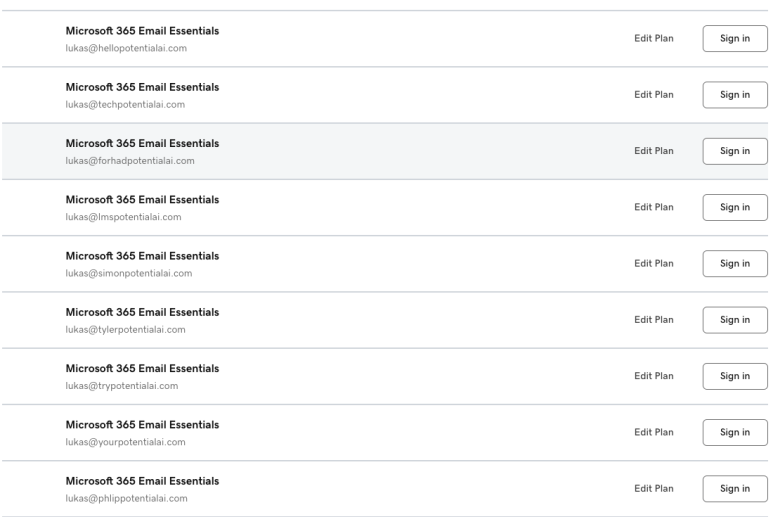
Setting up cold email. Setting up cold email cost me around ₩2M (~$1,450), I think. Each domain can send 30 emails a day. I'd never sent a cold email in Korea, but Matthew insisted on it. Before you start sending in earnest, you have to warm up the domain for about 15 days.
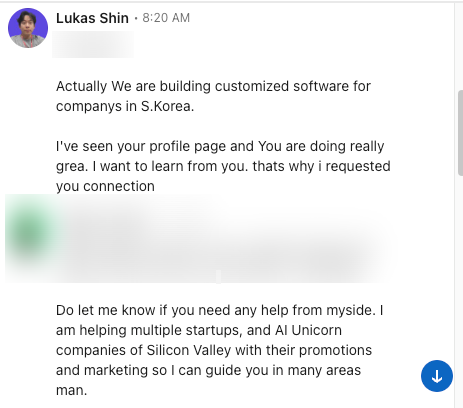
LinkedIn — commenting and starting conversations. Every day I spend an hour starting conversations with C-level executives I don't know. At first it felt like grunt work and made me wonder what I was even doing, but Matthew insisted on a full hour. Doing it, I started to get why. And though it was scary at first, I learned that approaching people warmly isn't much different in Korea or the U.S. There's no easier way to become someone's friend than asking them a question. Some people do this instinctively; people like me who can't just memorize the script and run it. For the details, see Part 4, Chapter 6 of Dale Carnegie's How to Win Friends and Influence People.
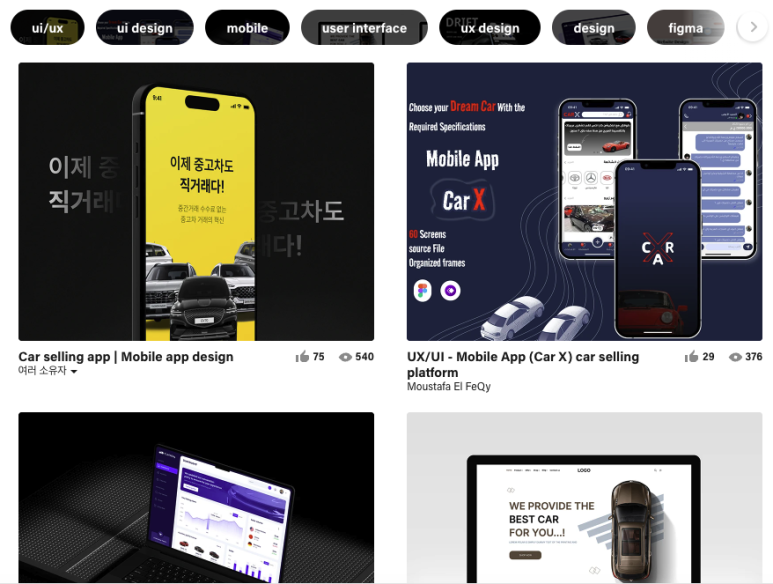
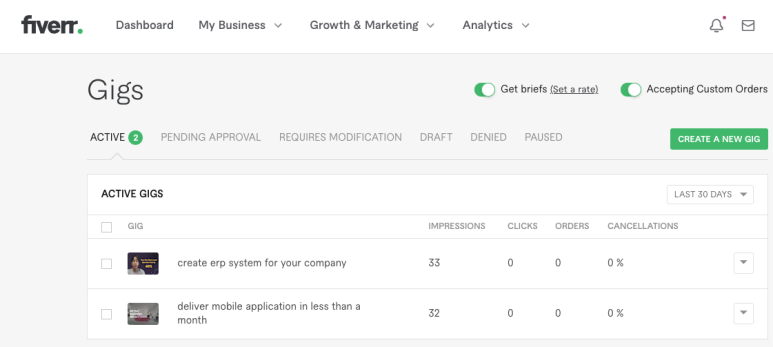
Dribbble / Behance / Fiverr and similar platforms. Luck scales with the number of attempts. You never know where it'll hit, so it's best to be active everywhere relevant. Fiverr is the animal kingdom of outsourcing and freelancing. If you can win there, you can compete with anyone anywhere in the world and come out on top. Unfortunately, my clicks are still at zero. A long way to go.
Many Hardships and Setbacks
Martial law in Bangladesh. This past week there was a major event in Bangladesh, where our teammates are. Students protested the ruling party's policy (a kind of patronage system), and martial law was declared. More than 200 students died, and the government shut down all internet in the country to keep the news from spreading. Bangladeshis spent a week in anxiety without internet, and countless companies in Bangladesh lost clients and saw their reputations damaged. I, too, was genuinely shaken when I couldn't reach my teammates. Thankfully, even amid the chaos, Fahad spent expensive international call charges to relay the situation and served as an emergency contact line confirming everyone was safe. I'm so grateful. But it was a serious crisis for us, too — our software factory had to shut its doors for about a week. We informed our clients and asked for their understanding.
A departure during probation. I learned that one teammate had signed a full-time contract with another company while still in their probation period. Running a 100% remote operation, I knew something like this would happen eventually — it just came sooner than expected. They were very talented, but I believe trust comes before skill, so I ended the contract immediately.
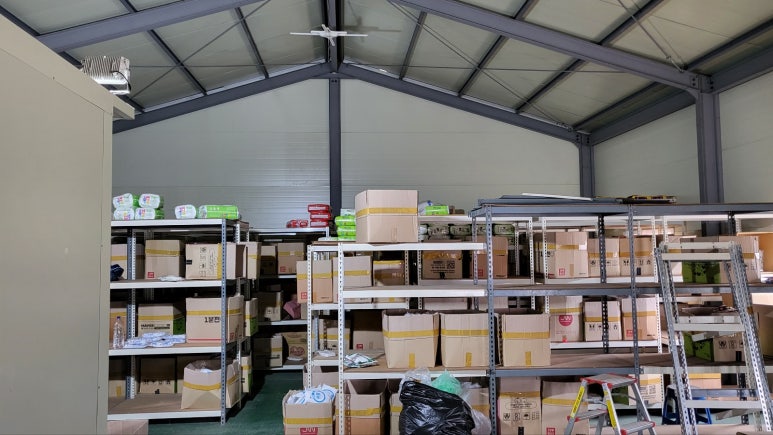
A VAT bomb. Figuring "how big could the VAT really be," I gave it no thought and got hit hard. I'd failed to account for how software businesses have almost no deductible expenses. My most recent venture had been a diaper business — VAT-exempt — which probably made it worse. My bank balance went thin in an instant.
The Constant Unease, and Small Wins
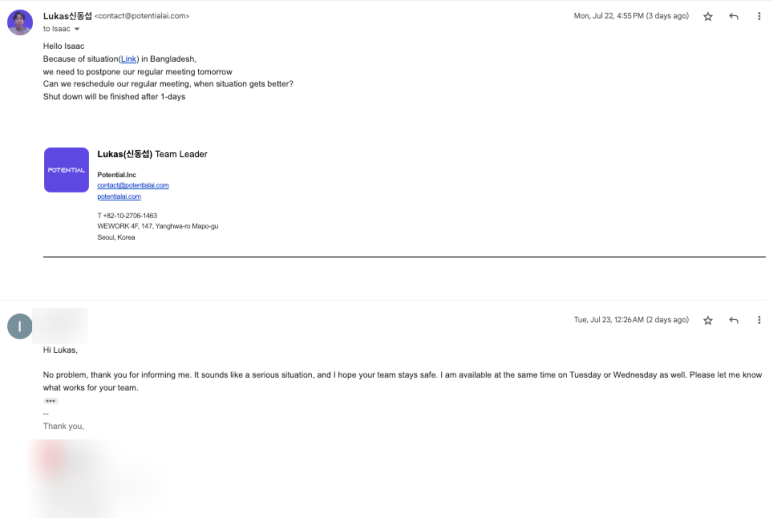
When you adventure through unknown territory from scratch, there's always plenty of fear. Countless startup mentors say that if you just run enough iterations you'll eventually find product-market fit — but whether each iteration is in the right direction always requires the founder's conviction. Korean clients keep pouring in, and the doubt keeps rising in a corner of my mind: am I doing something pointless here? Every time, I steady myself.
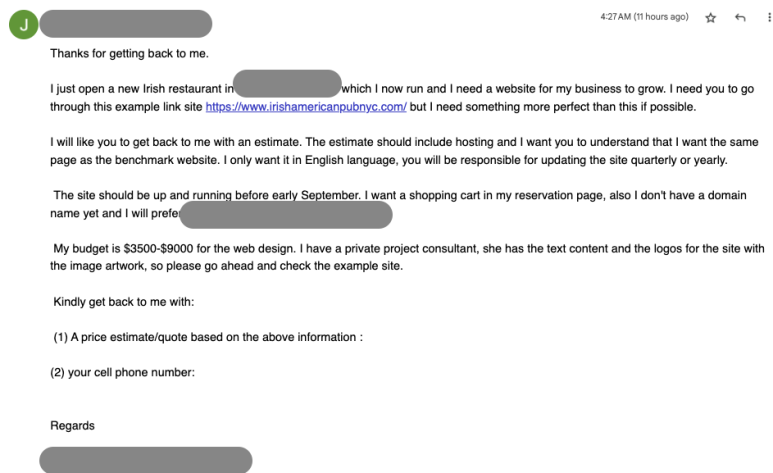
When the unease is heavy like this, a small win — personally and for the team — is genuinely vital. I have trouble sleeping and wake in the small hours every night. Then today, out of nowhere, I received an email.
The amount doesn't matter. What matters is that we succeeded in taking a first step in unknown territory. I got the email at 4:30 a.m. and my heart raced too much to sleep. I wrote up a proposal and quote in the same format I use for Korean clients and sent it off. I'm genuinely desperate — but the trick is to never let it show. I really hope Potential's second U.S. client comes out of Texas.
I write all my content in English now, but this challenge in the U.S. market is one thing I want to record whenever I get the chance — for some future Korean coming up behind me who will one day knock on the door of the U.S. market.
Potential is a global-expansion partner that walks the road West alongside Korean and Asian founders. If you're weighing a move into the U.S. market, let's talk anytime.