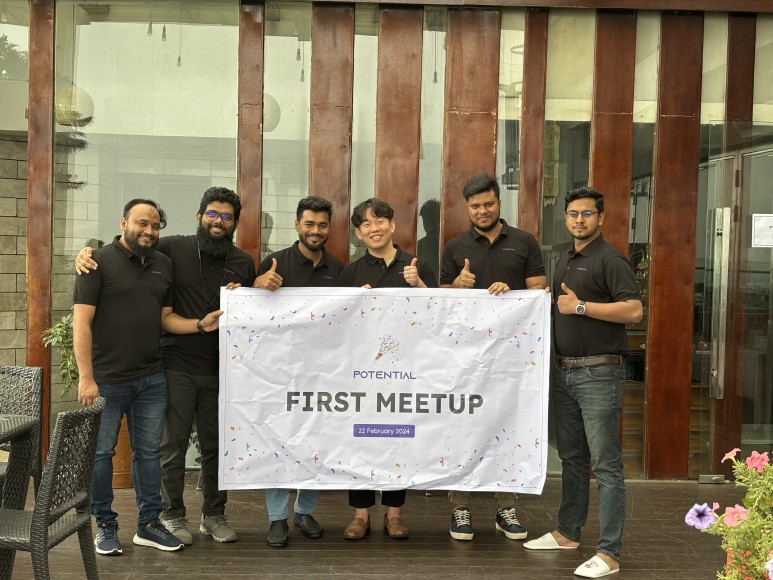
{`A team retreat with a team that grew to 24, and meetings with the CEOs of Musemind and Brainstation23.`}
My Second Trip to Bangladesh, 10 Months Later
Lukas
Jun 4th 26
18 min Read
Ten months later, I returned to Bangladesh. This is a record of a retreat with a remote team that had grown from 6 people to 24 — and of meeting the CEOs of two companies I'd always wanted to emulate, Musemind and Brainstation23. It was a trip that taught me a lot and left me deeply energized.
1. Preparation
I'm not sure where to start, so I'll just take it piece by piece. This trip began with a suggestion from Siam on our team.
Siam: "Lukas, we've been sprinting on projects nonstop for months — I think we need a refresh. How about a team retreat?"
Lukas: "Hmm, I'm fine with it, but does the team actually like company retreats? In Korea, people tend to dislike retreats pushed by the boss."
Siam: "We really love them. And it's good for the company's public image, too. If you just say OK, we'll handle the planning ourselves."
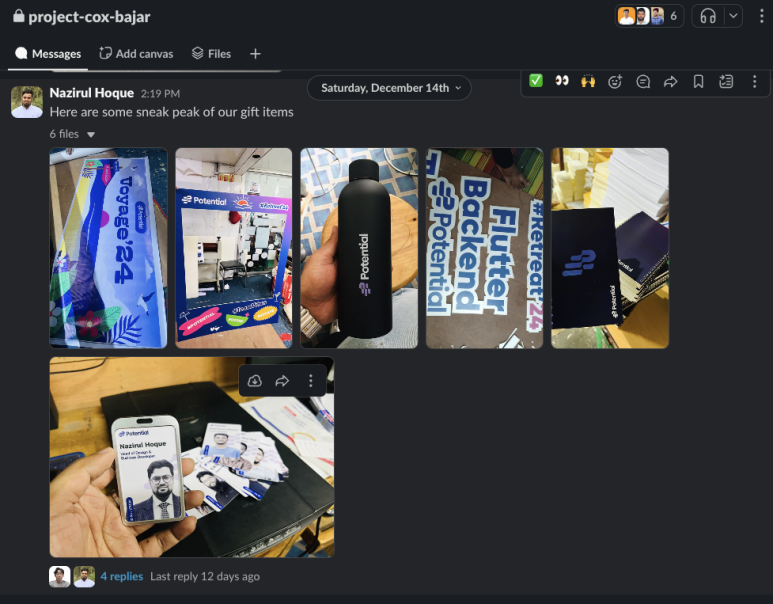
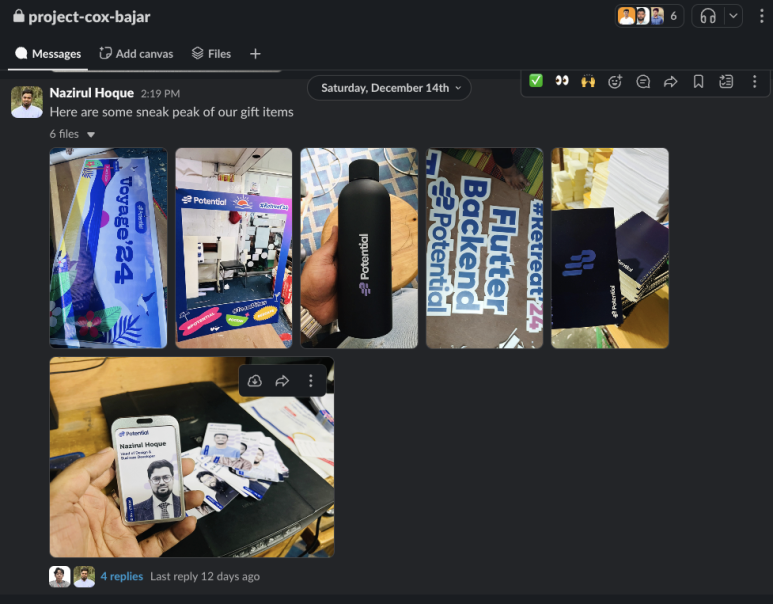
So the team planned the retreat, and I bowed my head to my wife to get the trip approved. (We have one kid now; with two it'll be harder, so shouldn't I go one more time while I can?) The team always knows how busy I am, so they look out for me in every way — hotel selection, flights, bus bookings, company swag, all handled.
2. Change — unfamiliar Dhaka becomes familiar
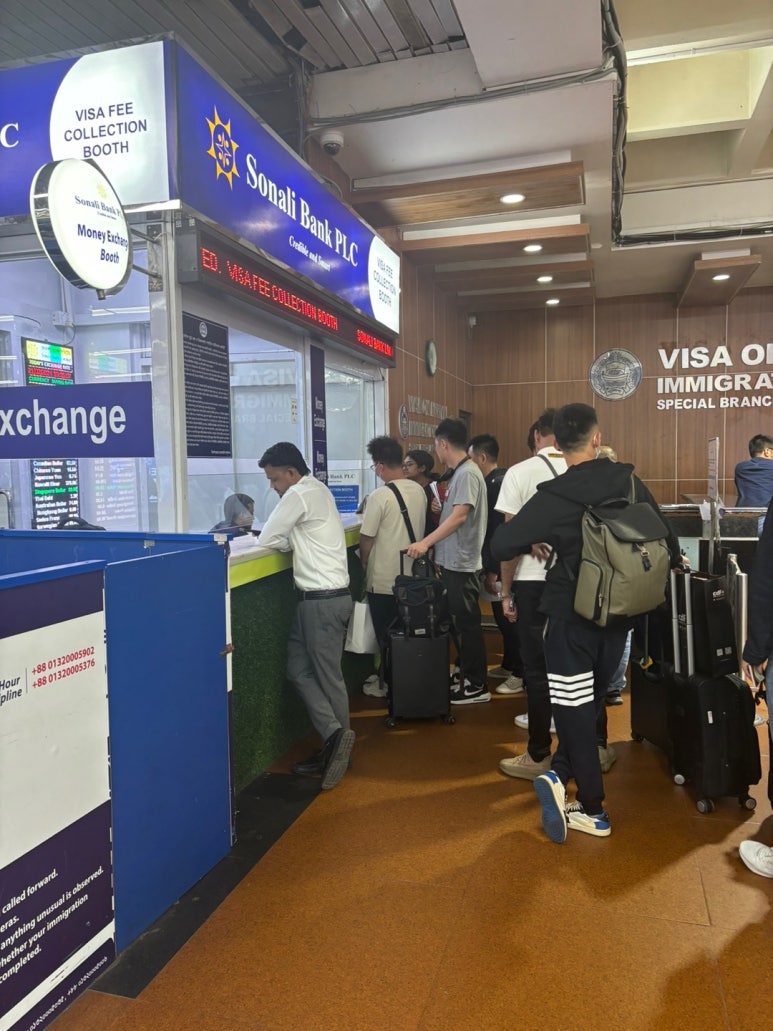
I vividly remember first landing in Dhaka, Bangladesh, on February 28th this year. A strange country, a strange city, hazy skies, brutal traffic — it was all unfamiliar. But maybe because this was my second visit, it started to feel familiar. I grew calm even in the traffic, and relaxed enough to smile back at the Bangladeshi kids who stared at me curiously.
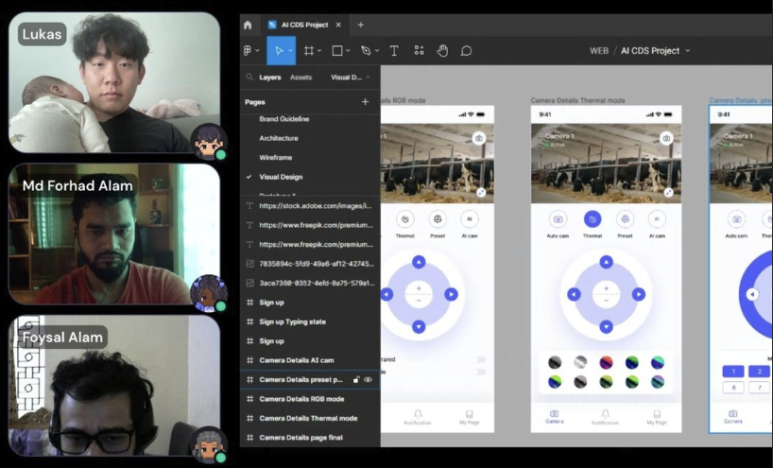
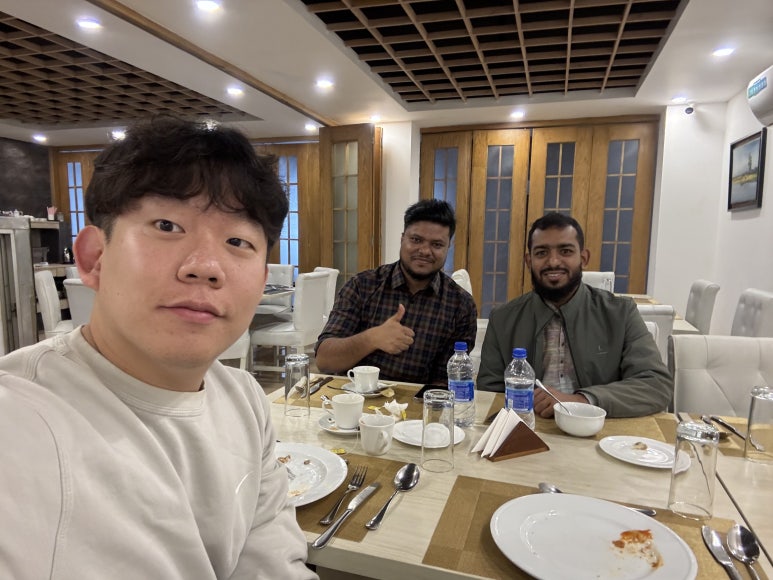
When I landed, Siam and Afnan were waiting. The rest of the team had already left for the retreat spot, Cox's Bazar, and we'd follow the next day on a domestic flight. Meeting people in person after only seeing them on a monitor is one of the joys of remote work. You can't predict who's big or small — for example, Siam, who always sat hunched over, turned out to be enormous, while a teammate who'd looked huge turned out to be small in person. Afnan was exactly as I'd pictured.

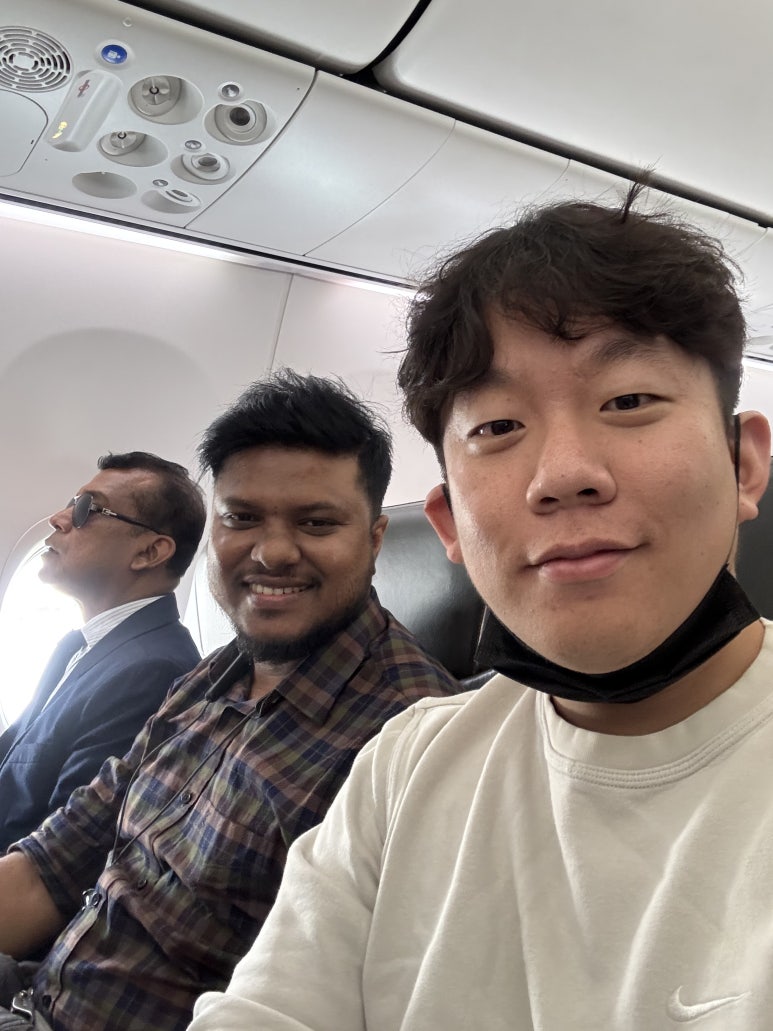
The next day Siam and I flew domestic to Cox's Bazar. Whenever I fly, I make a point of talking to the passenger next to me. (Life is decided by luck and effort — and you can actually raise your luck a bit through effort.) Hearing someone's life story is fun, and sometimes you discover an unexpected business opportunity. The man next to Siam runs a real-estate development business in Dhaka and, remarkably, held a stake in the very resort we were heading to. He told me to call him whenever I build an office in Dhaka. He offered to buy me lunch there, but our schedule didn't allow it — pass.
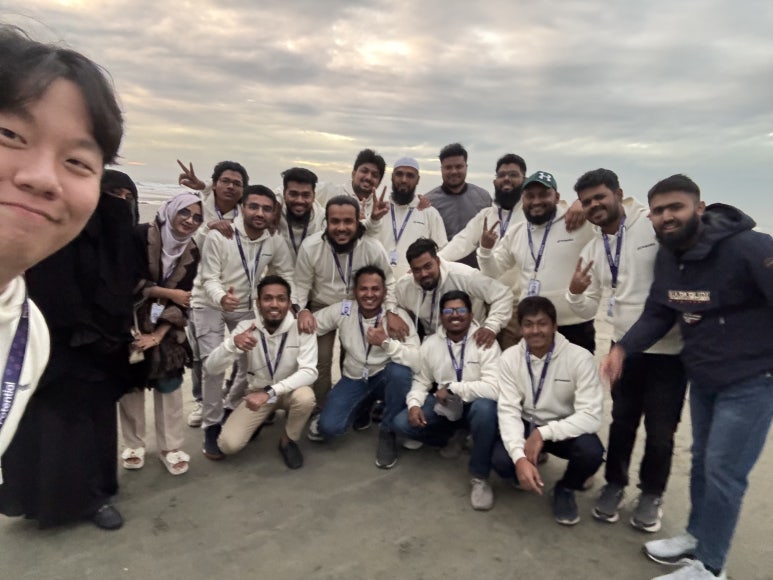
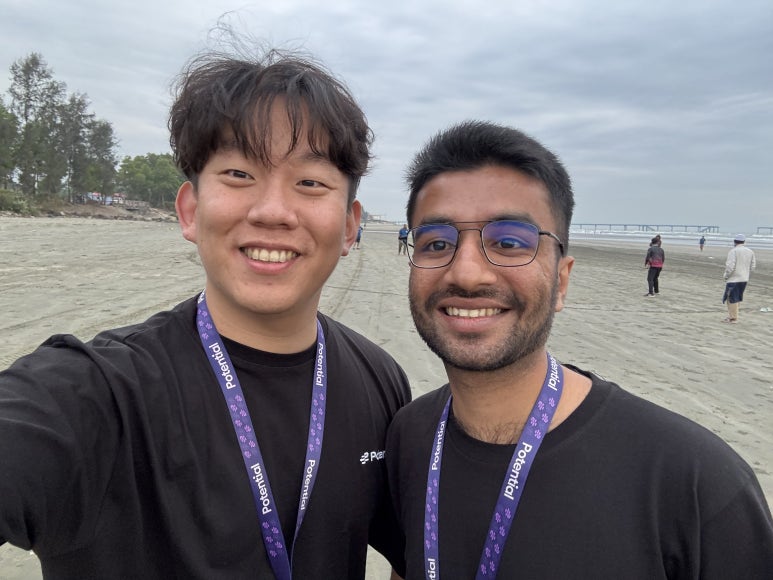
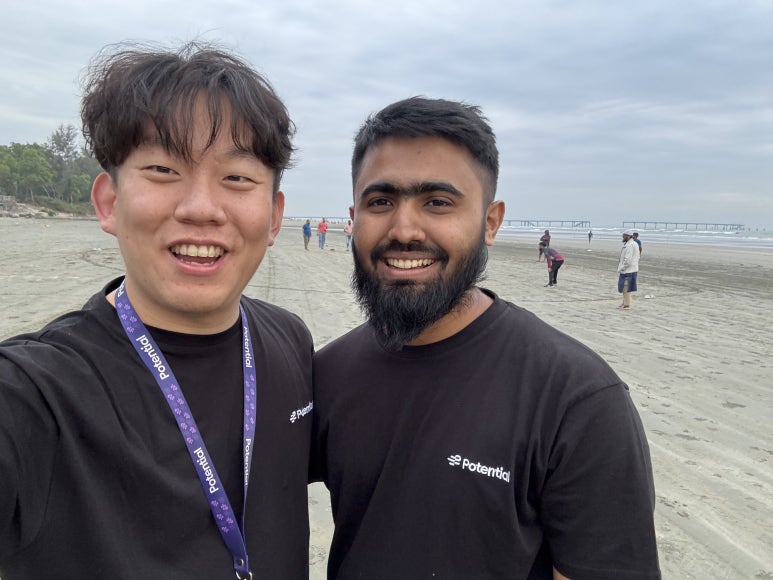
Cox's Bazar is, for Korea, like Jeju Island. People honeymoon there, and with decent hotels, companies use it for retreats too. We stayed at the Sea Pearl resort in Cox's Bazar. Unfortunately, I have no interest in hotels and resorts. The team seemed to love it, though. Bangladeshi Facebook is full of retreat posts, and the fact that people know which company stayed at which property tells me it's an indirect yardstick for a company's benefits. (There was a lot of programming, so I'll skip the retreat details.)
3. What changed in nine months — and the problems that never go away
A lot changed in nine months. A small team of 6 grew to 24, the projects multiplied, and the scale grew. Revenue went up too, but my own life didn't change. I eat what I ate, wear what I wear. If anything changed, it's that the intensity of the stress kept rising. And the problems the company faces changed.
Last year's questions
- Can we hire Bangladeshi developers well?
- Can we run a company fully remote?
- Can we run a company on flexible working hours?
- I'm not a strong developer myself — can I still build a good dev company?
- Is it right for me to keep coding?
- I've never led a team — can I run one well?
Today's questions
- How do we further optimize project management?
- How do we make the company run while I only do sales?
- How do we make the company's cash flow predictable?
- How do we become the most desirable company to work for in Bangladesh?
- How do we build a fair incentive system?
The problems I'm wrestling with now will soon be solved. But new ones will appear and bring even greater stress. I've learned that business is accepting that this cycle of problems and stress will repeat forever. If I could give a tip to myself a year ago, I'd say: "Don't be scared of how much you don't know. Keep reading books, keep asking other people lots of questions, like you're doing now, and you'll find the answers soon enough."
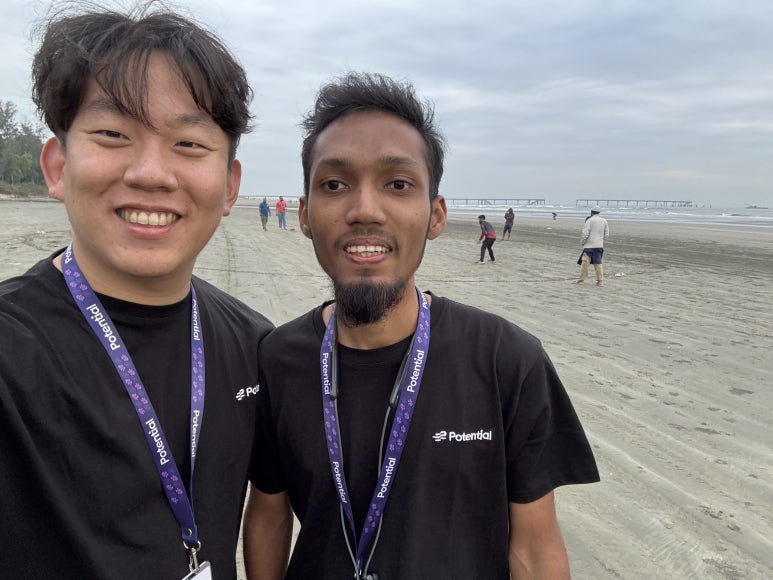
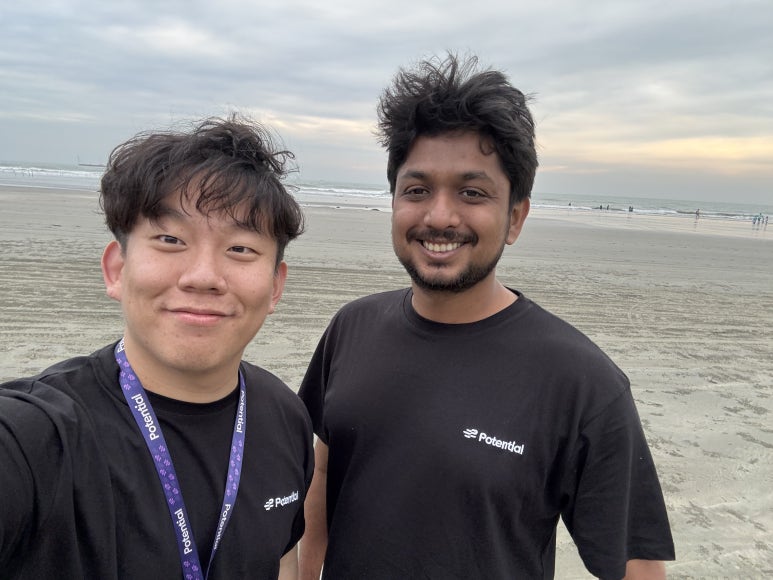
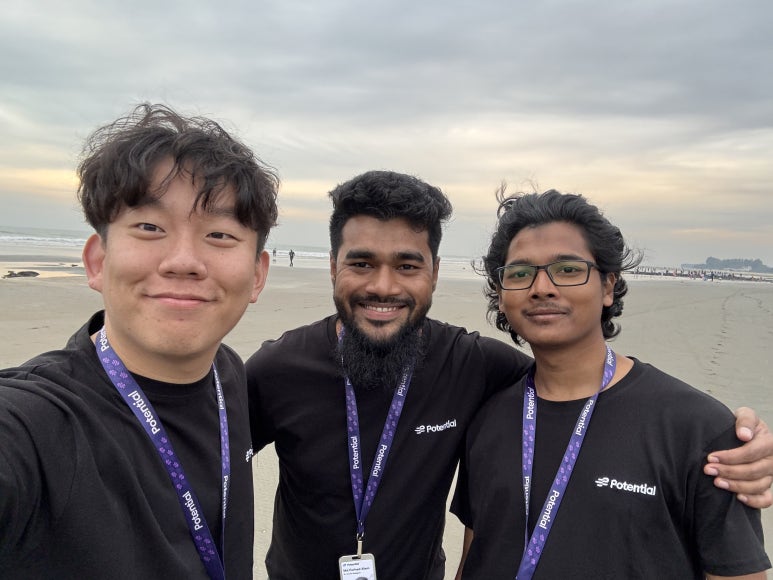
A thought struck me. Bangladeshi developers and designers who'd never met each other in their lives had brought their families to a remote place called Cox's Bazar to take profile photos with a CEO from Korea. The odds of that, statistically, must be vanishingly small. Watching a company that started from my small idea create bonds between people and leave memories behind — it stirred something new in me. What adventures lie ahead of us next?
4. Heroes of Bangladesh — Musemind
The highlight of the trip was the last day. Since starting this work, I'd heard my team talk endlessly about two companies — Musemind and Brainstation23 — and this was the day I could finally meet their CEOs. From back in Korea, I'd reached out through every channel to meet them: email, mutual contacts, and so on. Gratefully, the meetings came together. Both are married, so I bought an armful of gifts for their wives from Olive Young in advance.
Musemind is a design agency founded in 2022 — only two years old. Yet it does over $1M a month, and its growth is blistering. The skill goes without saying; they're exceptional. I'd wanted to learn from them since back in Korea, and I was lucky enough to meet the founder, Nasir, in person. I got to hear, vividly, the whole story — from his freelancing days in 2021, to starting the business in 2022, to the Musemind of today.
Nasir: "While many development agencies in Bangladesh were staring only at code, we were the only agency focused on design. Most dev agencies were neglecting design, but we realized what the client ultimately sees is the design — the frontend. So we hired designers who weren't being properly valued, and started the business with a vision of becoming a global top-tier design agency. And we reinvested most of what we earned. We filled the office with iMacs and spent serious money on the interior. I believed it was a necessary investment to inspire the designers. (Though at the time, the costs were so high it scared me a little.)"
Lukas: "I think a company faces different problems at different stages as it grows — at 1 person, at 20, at 50. We're going through the problems of being 24. We don't have a sales problem, but we have a lot of operations problems. Can you tell me how Musemind solved them?"
Nasir: "The good news is that the business is working. As long as the company is making money, everything else is secondary — don't worry about it too much. How about hiring a senior-level project manager first? Hiring on the HR side helped us enormously too. Operations problems just change in character at each stage of the company; you'll worry about them your whole life, so don't fret too much. They're the easy type of problem."
Lukas: "I think the agency business model rests on three pillars: 1) sales, 2) operations, 3) culture. If, as CEO, you had to focus on just one, which would it be? And what do you actually do in practice?"
Nasir: "Sales, without question. I don't look at anything else right now. It's only been eight months since I started focusing on sales, but it was a truly excellent choice. As a former designer, I'm constantly tempted to keep doing design work — but I believe the CEO must focus on sales, full stop. Oh, and one more thing: I'd recommend getting a consultation from an outside consultant. Company CEOs are prone to bias risk, and an outside perspective can resolve it. Our revenue grew a lot with an external consultant's help."
What I felt from the Musemind visit was real vibrancy — a sense that the whole company is building a culture all its own. And because it's run by a young CEO, its influence on Bangladeshi designers is enormous. The scariest thing about this company is that — like Samsung Electronics or SK Hynix in Korea — it has established itself as the most desirable design company to work for in Bangladesh. I was so envious, and I learned a lot.
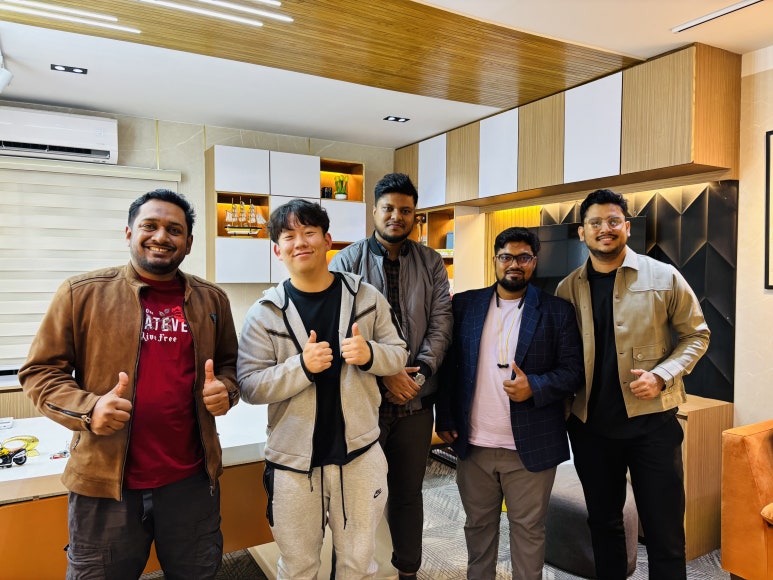
5. Heroes of Bangladesh — Brainstation23
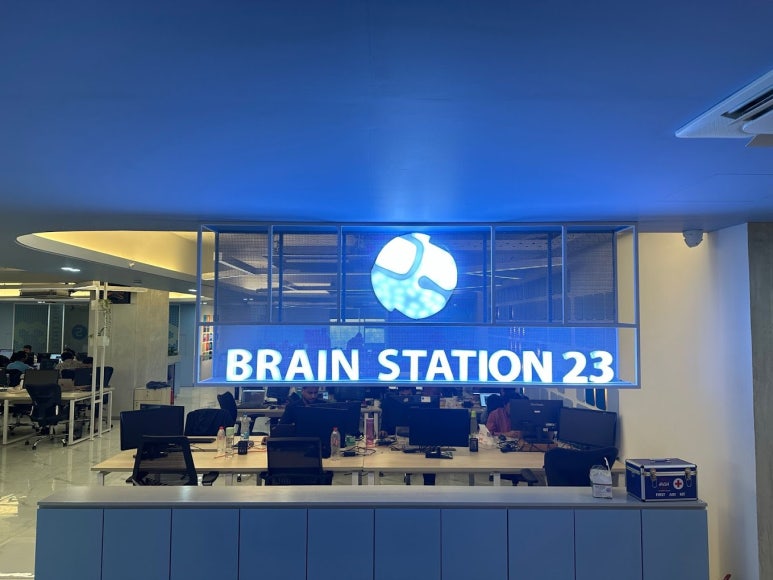
The other company was Brainstation23. The visit was so absorbing, so gripping, that I didn't take a single photo. I already knew a lot about Brainstation23's CEO, Raisul — because from the moment I started Potential, the company I most wanted to emulate was Brainstation23. I can't count how many times I'd watched all his interviews. And yet, meeting him in person, he was another level.
Brainstation23 is a development agency with 800 developers. Any computer-science graduate in Bangladesh wants to get in. The overall level of the developers is very high, and as a company founded in 2006, it has stable, established processes. Raisul had no reason whatsoever to meet the CEO of a potential future competitor. Knowing all too well that a CEO's time is the company's most important asset, I honestly hadn't expected him to agree. But gratefully, he allowed the visit.
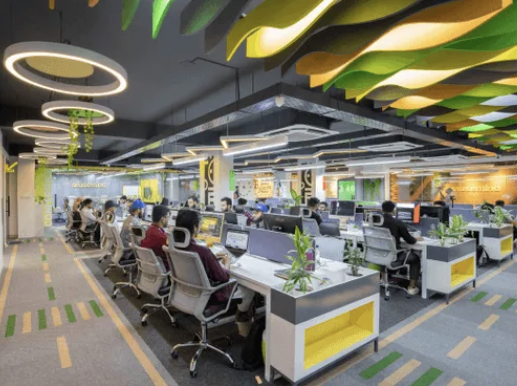
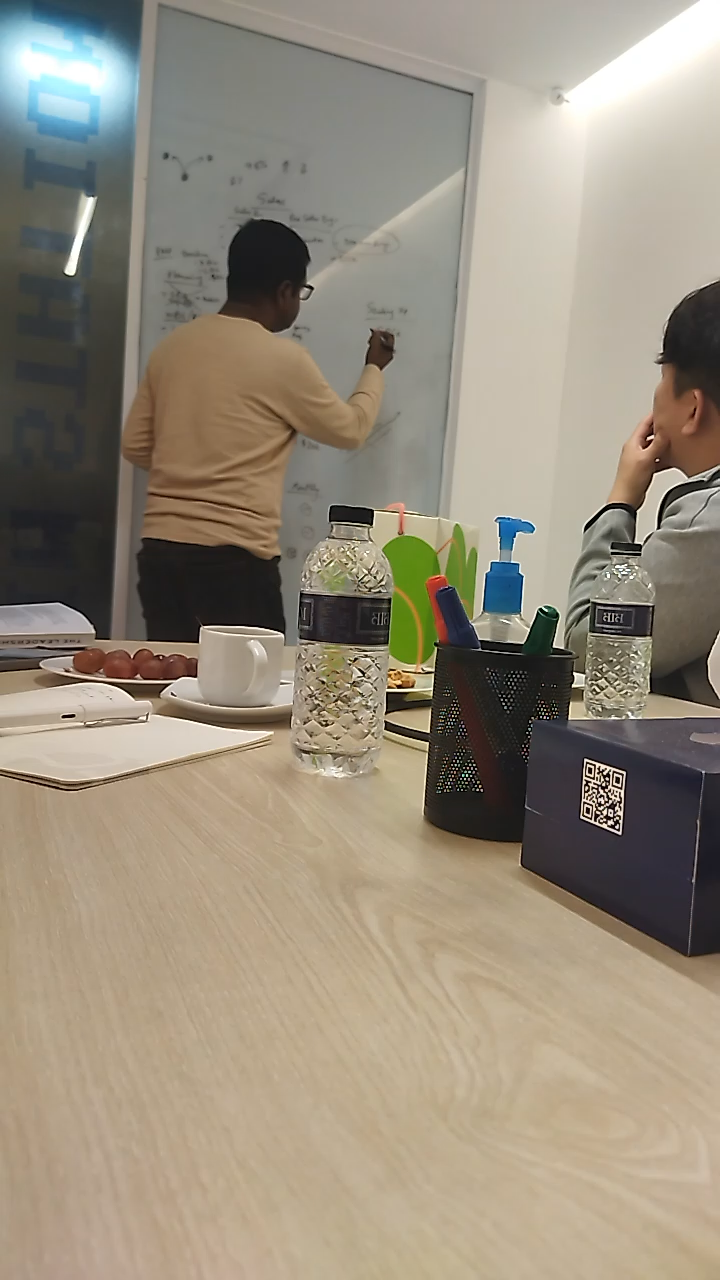
The scale was simply enormous. I visited one of their three offices — hundreds of monitors and desktops arranged in rows. The meeting was held in a small room. The down-to-earth Raisul walked in with a book and a notebook in hand. (I later learned he's a voracious reader.) We started with general questions.
Raisul: "You probably know the stories that have been in the press, so let's skip those and talk about what hasn't been covered. This is a book I recently started reading called The Leadership Pipeline — it's about how it's important to distribute the right responsibility to each leader. Say there's a position that has to manage 12 project managers. You shouldn't put the burden of every project's success on that position. A project's success rests on the project manager, not on the person managing the project managers. I recently learned you have to manage leadership in the form of a pipeline."

As he said this, he opened the book — every page packed with highlighter marks.
Raisul: "Was it Peter Drucker — you've probably heard the idea that people are promoted to their level of incompetence. I read somewhere that Google solves it like this: before promoting anyone, they test the relevant role in advance. If you want to promote someone to tech lead, you give them tech-lead-related work first. If they do well, you promote them; if not, you test someone else. That's how you manage the risk."
Raisul: "You have to acknowledge that every person is either a specialist type or a leader type. Developers especially. You have to distinguish leader types from specialist types and promote accordingly. Okay, that's enough of the general stuff — is there a specific problem where I could actually be helpful?"
Lukas: "As our team grows, we're hitting operations problems. You must have gone through operations problems at many stages on the way to your current size — how did you handle it at 30 people?"
Raisul glanced at his watch, said he had a meeting in 30 minutes and wasn't sure he could finish, but he'd show me how their company does it. Then he pulled out a marker and, writing on the whiteboard, gave me — literally — a detailed lecture on exactly how Brainstation23 does project management at scale, point by point.
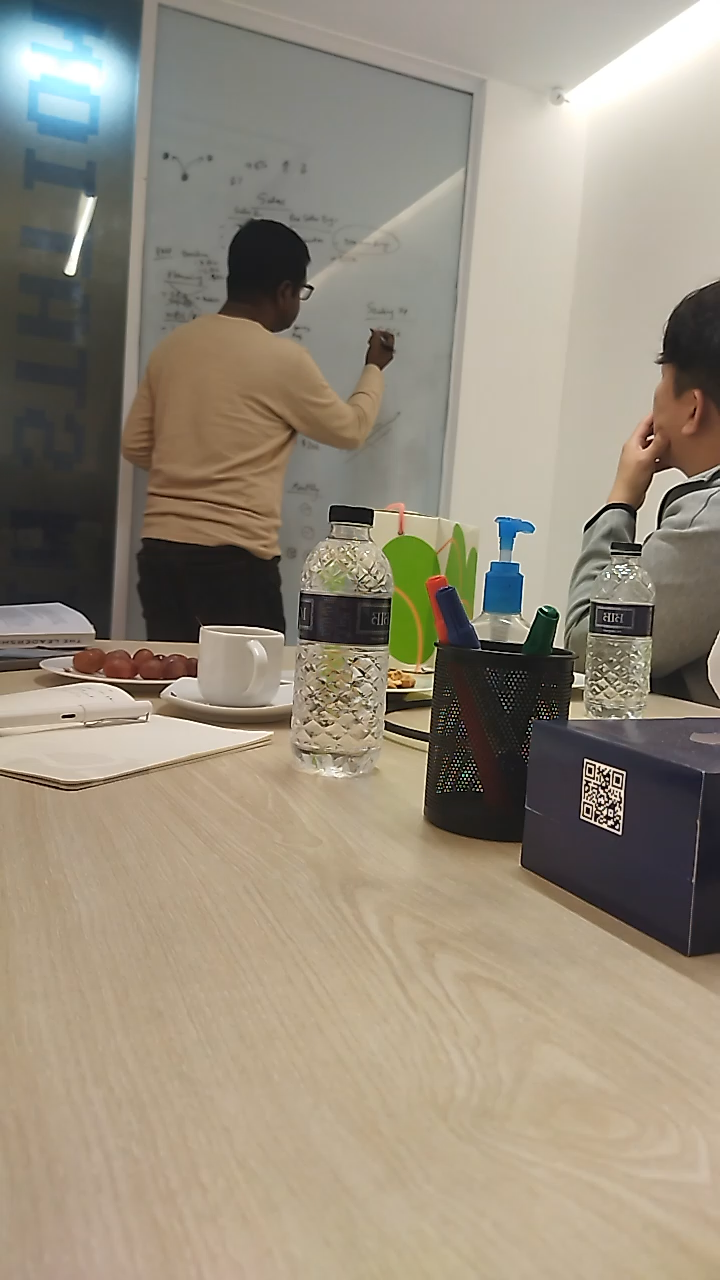
I was genuinely moved. That the CEO of a company at this scale could be this sincere about sharing his knowledge. Raisul's one-point lesson didn't end until well past the time of his next meeting. Leaving the office, many thoughts ran through me — gratitude for what I'd received that day, and doubt about whether I could ever teach everything I have to a younger founder who might become my future competitor, and a complex mix of emotions. Watching the book always in his hand, the dense notes filling its pages, and the way he jotted the key points of what I said into his notebook, I learned, secondhand, the virtues of a good CEO.
Closing
A few hours after the meeting, I caught my flight back to Incheon. It was a night flight, but I couldn't sleep well. It was a trip where I learned a lot and drew a lot of energy. The world is truly wide, and the masters are truly many. The moment I got home I came down with a fever and felt awful — and yet I'm carving out time to write this blog. I'd thought I was fine while in Bangladesh; the moment I got home, the tension must have released. I'll take it as a chance to organize my tangled thoughts. End of my second Bangladesh trip.

Potential (포텐셜) is the global-expansion development partner for Korean and Asian founders building toward Western markets. We build global products with a remote team that spans borders.