{`Our team breaks past five concurrent projects. Here's the bottleneck — and the two ways out of it.`}
What a Software Agency and a Handmade Cake Shop Have in Common

Lukas
Jun 4th 26
10 min Read
This week was relentless. New hires, managing development projects, meetings with new clients — work was piling up faster than I could clear it. When there's so much to do that it overwhelms me, I tend to hesitate before starting anything at all. And it's precisely at moments like these that I most need to organize my thoughts, so I'm carving out a sliver of a busy schedule to write.
A day that starts at 3 a.m.
My day starts at 3 a.m. After I feed the newborn who's woken in the early hours and finally get them back to sleep, I'm granted the one quiet stretch of the day — about five hours to gather my thoughts. I usually spend it writing, or thinking through what to do next and how.
The team breaks past five concurrent projects
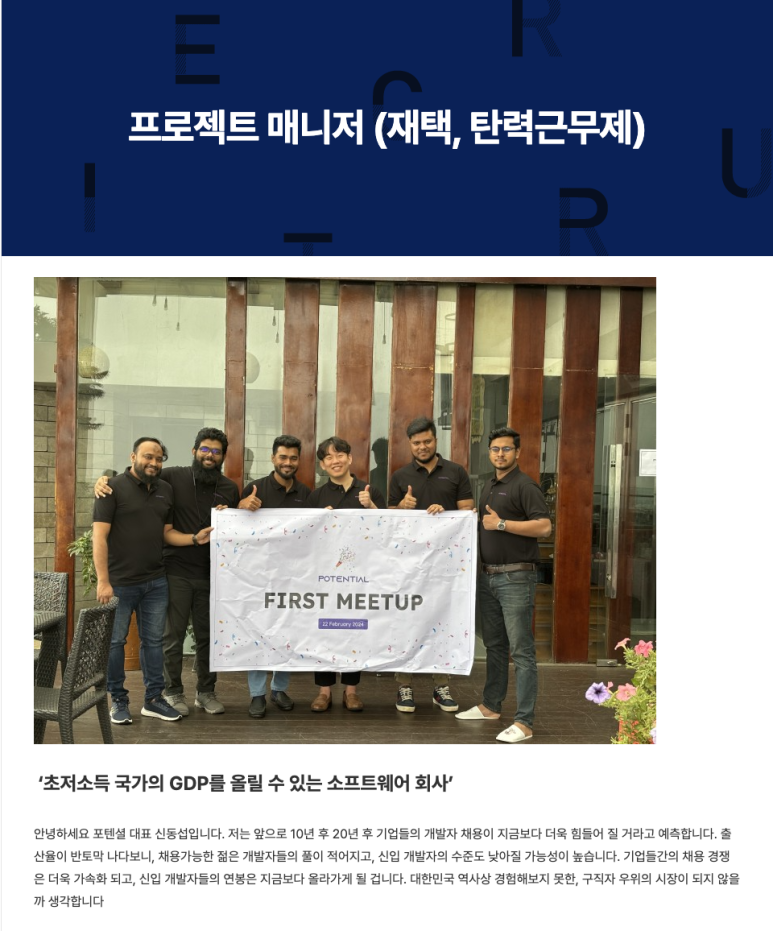
My biggest preoccupation lately is: how do we grow the organization's capacity to take on projects? After watching closely for the past month, the pattern is clear — our team starts to break down once we have more than five projects running at once. Right now, 100% of our clients are Korean companies, so for the time being I have no choice but to manage everything myself. When a new project comes in, I break the work into tasks, translate them into English, and hand them to the team; when issues arise, I communicate with the client directly. Since I only have 24 hours in a day, I can't take on more than five projects. And hiring isn't a simple fix either — finding a team member who can mediate between Korean clients and a global team is genuinely hard. The very ability that let me run a one-man show across development, sales, design, marketing, and management is now acting as a bottleneck just when it's time to scale.
The vicious cycle runs like this:
- Projects exceed five.
- I'm consumed by management.
- Sales and new clients inevitably get neglected (in fact, taking on more clients is no longer possible).
- Build requests keep coming, and I have no choice but to turn them down (which hurts).
- Growth stalls.
What decision should I make as a leader?
So what decision should I make as a leader here? Two options come to mind:
- Hire someone to share my role mediating between Korean clients and the global team.
- Shift our client base toward global customers.
I'm currently focused on option 2, but since I can't simply turn away the steady stream of build requests from Korean clients, I can't ignore option 1 either. How we get through this stage will likely shape the company's future direction in a big way. Every single day there's so much to do that I can barely breathe — but even so, I keep trying to take one step forward at a time.
Facing requests that weren't in the spec
Clients sometimes ask for things that weren't in the original plan. Since they don't have a technical background, they make these requests assuming "this much should be quick" — which I completely understand. But when the request involves significant effort, I often feel genuinely conflicted about how to handle it. By the book, you simply cut it off: "This isn't in the requirements, so we'll skip it." But human relationships don't work that cleanly — especially in an agency business, where customer satisfaction has to be treated as life or death.
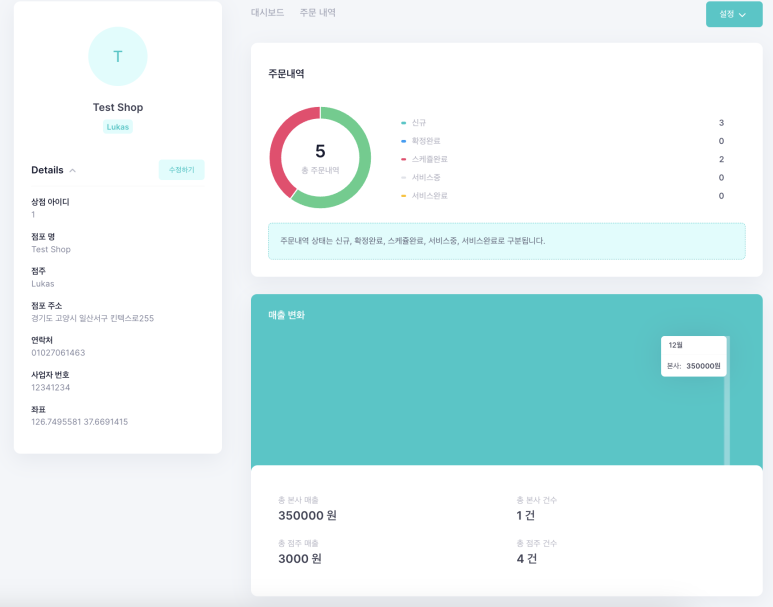
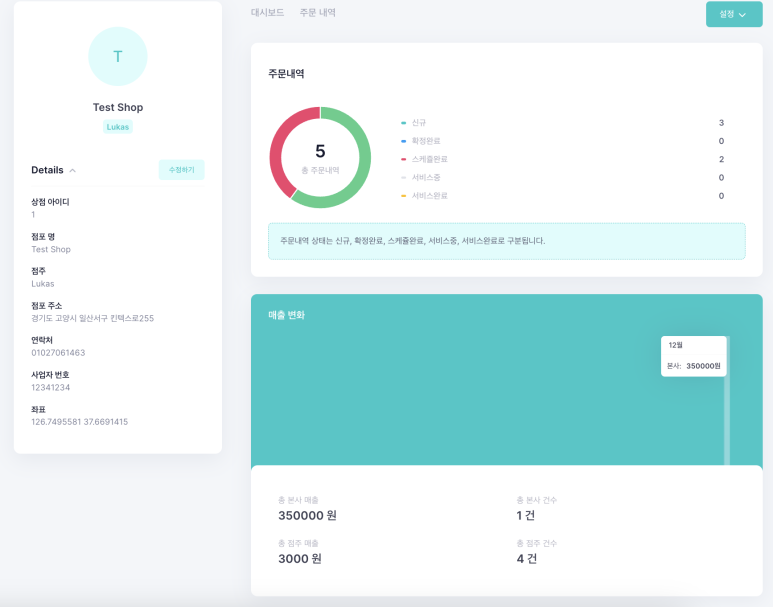
The chart dashboard this client asked for was exactly such a case. It required cleaning and shaping data by month, by order channel, and by order status — a finicky job. I'd replied over KakaoTalk that it would be difficult, but something about it nagged at me from the night before, so I've decided to just set aside the weekend and build it for them.

The handmade cake shop's dilemma
These days I often feel like Potential is running a handmade cake shop. We've succeeded, to a degree, at making cakes that are affordable, beautiful, and delicious. Customers are satisfied, and the ones who come once come back. But a handmade cake shop can only make so many cakes in a day. Potential can only make five cakes a day. There must be a way somewhere to grow a handmade cake shop into a Paris Baguette — I just can't quite see it yet.
Potential (포텐셜) is a partner that thinks through the path to global markets alongside Korean and Asian founders. I hope this is a small hint for someone at a similar stage.